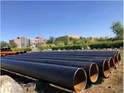
Hey there! As a 2LPP Coating supplier, I often get asked about how to test the abrasion resistance of 2LPP Coating. Well, you've come to the right place. In this blog, I'll walk you through the whole process and share some insights based on my experience in the industry.
First off, let's understand what 2LPP Coating is. 2LPP Coating, which you can learn more about here, is a popular anti - corrosion coating for steel pipes. It consists of two layers: a fusion - bonded epoxy (FBE) primer and a polyethylene topcoat. This combination provides excellent protection against corrosion, but its abrasion resistance is also crucial, especially in environments where the coated pipes might be subject to mechanical wear.
Why Test Abrasion Resistance?
Before we dive into the testing methods, it's important to know why we even bother testing the abrasion resistance of 2LPP Coating. In many applications, like oil and gas pipelines, the pipes are buried underground or transported over rough terrains. During installation, they may rub against rocks, soil, or other hard surfaces. If the coating doesn't have good abrasion resistance, it can get damaged, exposing the steel pipe to corrosion. This can lead to leaks, environmental hazards, and costly repairs. So, by testing the abrasion resistance, we can ensure that the coating will perform well in real - world conditions.
Testing Methods
Taber Abraser Test
One of the most common methods to test the abrasion resistance of 2LPP Coating is the Taber Abraser Test. This test uses a Taber Abraser machine, which consists of two rotating abrasive wheels that rub against the coated sample under a specified load.
To conduct the test, you first need to prepare a sample of the 2LPP - coated steel pipe. Cut a flat piece from the pipe, making sure the coating is intact. Then, mount the sample on the Taber Abraser machine. Select the appropriate abrasive wheels based on the expected type of abrasion in the application. For example, if the pipes will be in contact with rough soil, you might choose a more aggressive abrasive wheel.
Set the load on the wheels. The load is usually determined by the standards or the requirements of the specific project. Let the machine run for a certain number of cycles, say 1000 or 5000 cycles. After the test, measure the weight loss of the coating. A lower weight loss indicates better abrasion resistance.
The advantage of the Taber Abraser Test is that it's relatively easy to perform and gives quantitative results. However, it has some limitations. The test is conducted in a laboratory environment, which may not exactly mimic the real - world abrasion conditions.
Falling Sand Abrasion Test
Another method is the Falling Sand Abrasion Test. In this test, a stream of sand is dropped onto the coated sample from a certain height. The sand acts as an abrasive, wearing away the coating.
To carry out this test, you need a falling sand apparatus. Place the 2LPP - coated sample horizontally under the sand - dropping mechanism. Adjust the height from which the sand falls and the flow rate of the sand. The height and flow rate are based on the expected abrasion severity.
Let the sand fall on the sample for a specific period, like 30 minutes or an hour. After the test, examine the coating for visible damage. You can also measure the thickness loss of the coating using a coating thickness gauge. Similar to the Taber Abraser Test, less thickness loss means better abrasion resistance.
The Falling Sand Abrasion Test is good for simulating the abrasion caused by sand or granular materials. But like the Taber Abraser Test, it has its drawbacks. It may not accurately represent all types of abrasion, such as abrasion from sharp objects.
Dry Sand/Rubber Wheel Abrasion Test
The Dry Sand/Rubber Wheel Abrasion Test is another option. This test uses a rotating rubber wheel and a stream of dry sand. The coated sample is pressed against the rubber wheel while the sand is fed between the wheel and the sample.


Prepare the 2LPP - coated sample and mount it on the test rig. Set the speed of the rubber wheel and the flow rate of the sand. Run the test for a pre - determined number of revolutions of the wheel. After the test, evaluate the coating's condition. You can measure the volume loss of the coating using a profilometer or by weighing the sample before and after the test.
This test is useful for simulating abrasion in environments where there is a combination of sand and rubber - like contact, such as in some industrial applications.
Factors Affecting Abrasion Resistance
Several factors can affect the abrasion resistance of 2LPP Coating.
Coating Thickness
The thickness of the 2LPP Coating plays a significant role. Generally, a thicker coating will have better abrasion resistance. However, there's a limit. If the coating is too thick, it may crack or delaminate during application or use. So, it's important to find the optimal thickness for the specific application.
Coating Quality
The quality of the materials used in the 2LPP Coating and the application process also matter. If the FBE primer is not properly applied or if there are impurities in the polyethylene topcoat, the abrasion resistance can be reduced. High - quality raw materials and a well - controlled application process are essential for good abrasion resistance.
Environmental Conditions
The environment in which the coated pipes will be used can affect the abrasion resistance. For example, in a wet environment, the presence of water can act as a lubricant, reducing the abrasion. On the other hand, in a high - temperature environment, the coating may become softer, making it more susceptible to abrasion.
Comparing 2LPP Coating with Other Coatings
It's also interesting to compare the abrasion resistance of 2LPP Coating with other similar coatings, like 3 Layer Polyethylene (3LPE) Coating.
3LPE Coating, which you can learn more about here, has an additional layer compared to 2LPP Coating. The extra layer usually provides better abrasion resistance in some cases. However, 2LPP Coating can still be a good choice, especially when cost is a concern. It offers a good balance between performance and cost.
Conclusion
Testing the abrasion resistance of 2LPP Coating is crucial to ensure its performance in real - world applications. By using methods like the Taber Abraser Test, Falling Sand Abrasion Test, or Dry Sand/Rubber Wheel Abrasion Test, we can get an idea of how well the coating will withstand abrasion. Factors like coating thickness, quality, and environmental conditions also play a role in the abrasion resistance.
If you're in the market for 2LPP Coating and want to know more about its abrasion resistance or other properties, don't hesitate to reach out. We're here to help you make the right choice for your project. Whether you're involved in oil and gas, water supply, or other industries, our 2LPP Coating can provide the protection you need. Contact us today to start a discussion about your coating requirements.
References
- ASTM D4060 - Standard Test Method for Abrasion Resistance of Organic Coatings by the Taber Abraser
- ISO 7784 - 2:2016 - Paints and varnishes — Determination of abrasion resistance — Part 2: Falling abrasive test