Hey there! As an Oil And Gas Pipes supplier, I've seen firsthand how crucial it is to keep our pipes in top - notch condition. One of the most effective ways to do that is through acoustic emission detection. So, let's dive into what acoustic emission detection methods for oil and gas pipes are all about.
What is Acoustic Emission (AE) Detection?
Acoustic emission is the phenomenon where materials release stress - wave energy when they're deformed or damaged. In the context of oil and gas pipes, this could be due to corrosion, cracking, or other forms of structural damage. AE detection systems pick up these stress waves as acoustic signals, which can then be analyzed to figure out what's going on inside the pipes.
Why is AE Detection Important for Oil and Gas Pipes?
Oil and gas pipes operate in some pretty harsh environments. They're exposed to high pressures, corrosive substances, and extreme temperatures. Any damage to these pipes can lead to leaks, which not only cause environmental problems but also result in huge financial losses. AE detection allows us to catch problems early, before they turn into major disasters.
Common Acoustic Emission Detection Methods
1. Threshold - Based Detection
This is one of the simplest AE detection methods. A threshold level is set for the acoustic signals. If the signal amplitude exceeds this threshold, it's considered an event. For example, in a pipeline, if there's a sudden crack, it'll generate a high - amplitude acoustic signal. The detector will pick up this signal when it crosses the set threshold. However, this method has its limitations. It can't always distinguish between real damage - related signals and background noise.
2. Frequency Analysis
Frequency analysis involves looking at the frequency components of the acoustic signals. Different types of damage generate signals with distinct frequency characteristics. For instance, a corrosion - related signal might have a different frequency range compared to a signal caused by a mechanical impact. By analyzing the frequency spectrum of the AE signals, we can get a better idea of the type and severity of the damage. Tools like Fast Fourier Transform (FFT) are commonly used for this purpose.


3. Pattern Recognition
Pattern recognition is a more advanced method. It uses algorithms to analyze the shape and characteristics of the AE signals. Machine learning techniques can be applied to train models to recognize patterns associated with different types of damage. For example, a trained model can distinguish between signals caused by internal corrosion and those caused by external wear. This method is more accurate than the threshold - based and frequency - analysis methods, but it requires a large amount of data for training.
4. Location - Based Detection
In addition to detecting the presence of damage, it's also important to know where the damage is located. Location - based detection methods use multiple sensors placed along the pipeline. By measuring the time difference of arrival of the AE signals at different sensors, the location of the damage source can be calculated. This is based on the principle that the signal will reach the sensors closer to the damage source earlier.
Real - World Applications in Our Oil and Gas Pipe Supply
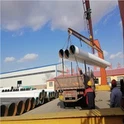
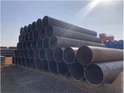
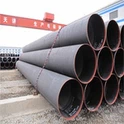
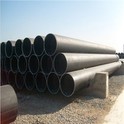
As an Oil And Gas Pipes supplier, we use these AE detection methods to ensure the quality of our products. For example, before we deliver API 5L LSAW Steel Pipe, we conduct AE tests to make sure there are no hidden defects. These pipes are widely used in oil and gas transportation, and any damage could lead to significant problems.
We also apply AE detection to Carbon Steel API Sour Service Line Pipe. These pipes are designed to handle sour gas, which contains hydrogen sulfide. The corrosive nature of sour gas makes them more prone to damage. AE detection helps us identify any early signs of corrosion or cracking, so we can take corrective actions.
When it comes to Gas Pipe Plumbing, safety is our top priority. Acoustic emission detection allows us to detect any potential leaks or damage in the pipes, ensuring that the gas is transported safely to the end - users.
Advantages of Using AE Detection in Our Supply Chain
- Early Detection: We can identify damage at an early stage, which reduces the risk of major failures and costly repairs.
- Non - Destructive: AE detection is a non - destructive testing method. It doesn't damage the pipes during the testing process, so the pipes can still be used after the test.
- Real - Time Monitoring: We can monitor the pipes in real - time, which means we can respond quickly to any emerging problems.
Challenges and Future Developments
Of course, AE detection isn't without its challenges. Background noise can interfere with the signals, making it difficult to accurately detect damage. Also, the interpretation of AE signals requires a high level of expertise.
In the future, we expect to see more advanced algorithms and sensors for AE detection. Machine learning and artificial intelligence will play an even bigger role in improving the accuracy of damage detection. For example, self - learning algorithms could continuously adapt to different pipeline conditions and improve their detection capabilities over time.
Conclusion
Acoustic emission detection is a powerful tool for ensuring the safety and integrity of oil and gas pipes. As an Oil And Gas Pipes supplier, we're committed to using these methods to provide high - quality products to our customers. If you're in the market for reliable oil and gas pipes, we'd love to have a chat with you. Whether you need API 5L LSAW Steel Pipe, Carbon Steel API Sour Service Line Pipe, or Gas Pipe Plumbing, we've got you covered. Get in touch with us to discuss your requirements and let's work together to keep your pipelines in great shape.
References
- ASTM E1316 - 19 Standard Terminology for Nondestructive Examinations.
- Prosser, W. H. (1986). Acoustic emission in materials: theory and applications. Elsevier.
- Ohtsu, M., & Grosse, C. U. (Eds.). (2008). Acoustic emission testing. Springer.