


Hey there! As a supplier of 3 Layer Polyethylene (3LPE), I often get asked about the typical densities of this awesome material. So, I thought I'd sit down and write a blog post to share some insights with you all.
First off, let's quickly go over what 3LPE is. It's a high - performance anti - corrosion coating commonly used for steel pipes. This coating consists of three layers: an epoxy primer, an adhesive layer, and a polyethylene top layer. Each layer plays a crucial role in protecting the steel pipe from corrosion, which is super important, especially in harsh environments like underground pipelines or offshore oil and gas facilities.
Now, let's talk about density. Density is a fundamental property of any material, and it gives us an idea of how much mass is packed into a given volume. For 3LPE, the density can vary depending on a few factors, such as the type of polyethylene used and the manufacturing process.
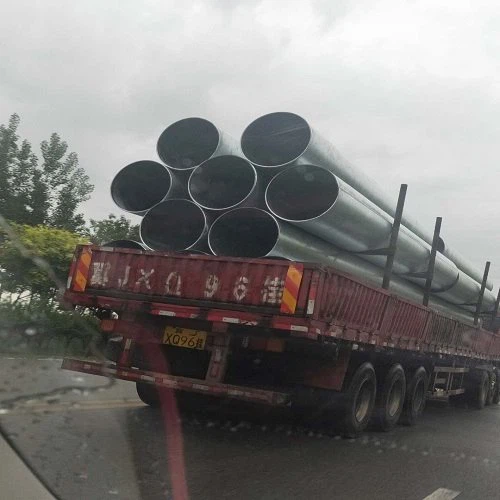

The polyethylene used in the top layer of 3LPE can be either high - density polyethylene (HDPE) or medium - density polyethylene (MDPE). HDPE typically has a density ranging from 0.941 to 0.965 g/cm³. It's known for its high strength, stiffness, and excellent chemical resistance. This makes it a great choice for applications where the pipe might be exposed to tough chemicals or high - pressure conditions.
On the other hand, MDPE has a density in the range of 0.926 to 0.940 g/cm³. It offers a good balance between flexibility and strength. MDPE is often used when the pipe needs to be a bit more flexible, for example, in some above - ground installations or in areas where the ground might shift slightly.
The epoxy primer layer has a different density compared to the polyethylene layers. Epoxy resins usually have a density around 1.1 to 1.4 g/cm³. The adhesive layer, which bonds the epoxy primer to the polyethylene top layer, also has its own density characteristics. The adhesive is typically formulated to have good adhesion properties while maintaining a certain density that allows for proper bonding and overall coating performance.
In the manufacturing process, factors like the extrusion temperature, pressure, and cooling rate can also affect the density of the 3LPE coating. If the extrusion temperature is too high, the polyethylene might expand more, resulting in a lower density. On the contrary, a lower extrusion temperature could lead to a more compact structure and a higher density.
When it comes to the overall density of the 3LPE coating system, it's a bit tricky to give a single value because it depends on the thickness of each layer. But generally, for a well - made 3LPE coating, the overall density will be influenced mainly by the polyethylene top layer since it usually makes up a significant portion of the coating thickness.
Let's compare 3LPE with some other related coatings. For example, 2LPP Coating is a two - layer polypropylene coating. It has different density characteristics compared to 3LPE. The polypropylene in 2LPP has a density around 0.90 - 0.91 g/cm³, which is generally lower than that of HDPE used in 3LPE. This lower density can make 2LPP a bit lighter, but 3LPE offers better adhesion and corrosion protection in many cases.
Another related process is Hot Dip Spun Galvanized. Galvanized coatings have a much higher density because they are made of zinc, which has a density of about 7.14 g/cm³. The hot - dip process involves dipping the steel pipe into molten zinc to form a protective layer. While it provides good corrosion protection, 3LPE can offer additional protection in more corrosive environments.
As a 3LPE supplier, we make sure to control the density of our coatings very carefully. We use advanced manufacturing techniques and quality control measures to ensure that the density of each layer meets the industry standards and our customers' requirements. This helps us to provide a high - quality 3LPE coating that offers excellent corrosion protection and long - term durability.
If you're in the market for a reliable anti - corrosion coating for your steel pipes, 3LPE Coating is definitely a great option. The typical densities of the materials used in 3LPE contribute to its overall performance, making it suitable for a wide range of applications.
Whether you're working on an oil and gas project, a water pipeline, or any other infrastructure that requires corrosion - resistant steel pipes, we're here to help. Our team of experts can provide you with all the information you need about 3LPE, including density, coating thickness, and application methods.
If you're interested in learning more or want to discuss a potential purchase, don't hesitate to reach out. We're always happy to have a chat and see how we can meet your specific needs.
References
- Handbook of Polymer Science and Technology
- Corrosion Protection of Steel Pipes: Principles and Practices


