


Hey there! As a supplier of 3LPE Coating, I've seen firsthand the ins and outs of how this coating impacts pipe bending. So, let's dive right in and explore this topic.
First off, what exactly is 3LPE Coating? Well, 3LPE Coating, also known as 3 Layer Polyethylene, is a high - performance anti - corrosion coating system for steel pipes. It consists of three layers: an epoxy primer, an adhesive layer, and a polyethylene top layer. This combination provides excellent protection against corrosion, abrasion, and mechanical damage.
Now, let's talk about pipe bending. Pipe bending is a common process in many industries, such as oil and gas, construction, and water supply. It's used to create pipes with different shapes and angles to fit specific project requirements. But when you have a pipe coated with 3LPE, the bending process can get a bit tricky.
One of the main impacts of 3LPE Coating on pipe bending is related to the coating's flexibility. The 3LPE Coating needs to be flexible enough to withstand the deformation that occurs during the bending process. If the coating is too rigid, it may crack or delaminate from the pipe surface. This can expose the underlying steel to the environment, leading to corrosion and reducing the pipe's service life.
The flexibility of the 3LPE Coating depends on several factors. One is the type of polyethylene used in the top layer. Different grades of polyethylene have different levels of flexibility. For example, high - density polyethylene (HDPE) is generally more rigid than linear low - density polyethylene (LLDPE). So, when selecting a 3LPE Coating for a pipe that will be bent, it's important to choose a coating with a polyethylene layer that has the right level of flexibility.
Another factor is the thickness of the coating. Thicker coatings may be more prone to cracking during bending because they have less ability to deform without breaking. On the other hand, if the coating is too thin, it may not provide adequate protection against corrosion. So, finding the right balance in coating thickness is crucial.
During the pipe bending process, the outer surface of the pipe is stretched, while the inner surface is compressed. The 3LPE Coating needs to be able to accommodate these changes in stress. If the coating doesn't adhere well to the pipe surface, it may start to peel off during bending. This is why the epoxy primer and adhesive layer in the 3LPE Coating are so important. They help to ensure a strong bond between the polyethylene top layer and the steel pipe.

To test the performance of 3LPE Coating during pipe bending, manufacturers often conduct bend tests. These tests involve bending coated pipes to a specific angle and then examining the coating for any signs of damage, such as cracking or delamination. Based on the results of these tests, the coating can be optimized to improve its performance during bending.
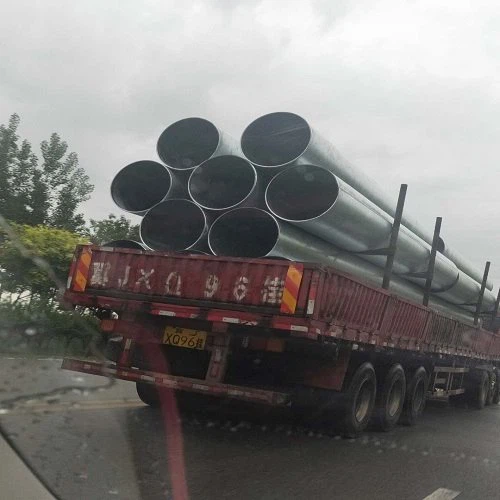
In some cases, alternative anti - corrosion coatings may be considered for pipes that will undergo significant bending. One such option is Hot Dip Spun Galvanized. This process involves coating the pipe with a layer of zinc by dipping it in a bath of molten zinc. Hot dip spun galvanized coatings can provide good corrosion protection and are generally more flexible than some 3LPE Coatings. However, they may not offer the same level of abrasion resistance as 3LPE Coatings.
So, when should you choose 3LPE Coating for a pipe that will be bent? If the pipe will be exposed to harsh environmental conditions, such as soil with high moisture content or aggressive chemicals, 3LPE Coating is often a better choice. Its excellent corrosion and abrasion resistance can help to ensure the long - term integrity of the pipe. On the other hand, if the bending requirements are very severe and the environmental conditions are less harsh, a hot dip spun galvanized coating might be more suitable.
As a 3LPE Coating supplier, I understand the importance of providing coatings that can withstand the rigors of pipe bending. We work closely with our customers to understand their specific requirements and recommend the best coating solutions. Whether it's choosing the right grade of polyethylene, optimizing the coating thickness, or conducting thorough quality control tests, we do everything we can to ensure that our 3LPE Coating performs well during pipe bending.

If you're in the market for high - quality 3LPE Coating for your pipes, don't hesitate to reach out. We're here to help you find the perfect coating solution for your project. Whether you have questions about the impact of 3LPE Coating on pipe bending or need advice on coating selection, our team of experts is ready to assist you. Let's work together to ensure the success of your piping projects!
References
- Industry standards for pipe coatings and bending processes.
- Research papers on the performance of anti - corrosion coatings during pipe deformation.
- Internal company records and test results on 3LPE Coating performance.


