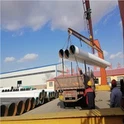
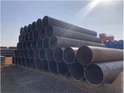
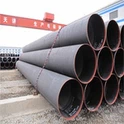
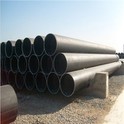
As a supplier of ASTM A252 Grade 3 Pipe, I often encounter inquiries from clients regarding the most suitable welding methods for this specific type of pipe. ASTM A252 Grade 3 Pipe is widely used in piling applications due to its high strength and excellent corrosion resistance. Selecting the appropriate welding method is crucial to ensure the integrity and performance of the welded joints. In this blog post, I will discuss several welding methods that are well - suited for ASTM A252 Grade 3 Pipe.
Shielded Metal Arc Welding (SMAW)
Shielded Metal Arc Welding, also known as stick welding, is a popular and versatile welding method. It is relatively simple to set up and can be used in various environments, including outdoor and field applications. In SMAW, an electrode covered with a flux coating is used. When the electrode is struck against the workpiece, an arc is formed, melting both the electrode and the base metal. The flux coating on the electrode decomposes to form a protective gas shield and a slag layer, which protects the molten metal from atmospheric contamination.
One of the advantages of SMAW for ASTM A252 Grade 3 Pipe is its portability. Welders can easily carry the equipment to different job sites. It is also suitable for welding in difficult positions, such as vertical and overhead welding. However, SMAW has some limitations. The welding speed is relatively slow compared to other methods, and the quality of the weld can be affected by the skill level of the welder. Additionally, the slag produced during welding needs to be removed after each pass, which can be time - consuming.
Gas Metal Arc Welding (GMAW)
Gas Metal Arc Welding, commonly referred to as MIG (Metal Inert Gas) welding, is another widely used welding method. In GMAW, a continuous solid wire electrode is fed through a welding gun, and a shielding gas is used to protect the weld pool from oxidation and contamination. The shielding gas can be a mixture of argon and carbon dioxide, depending on the specific requirements of the welding job.


GMAW offers several benefits for welding ASTM A252 Grade 3 Pipe. It has a high welding speed, which can significantly increase productivity. The process is also relatively easy to learn, making it accessible to less - experienced welders. The weld quality is generally high, with good penetration and a smooth bead appearance. However, GMAW requires a more complex setup compared to SMAW. It also needs a stable power source and a continuous supply of shielding gas, which may limit its use in some remote locations.
Flux - Cored Arc Welding (FCAW)
Flux - Cored Arc Welding is similar to GMAW, but instead of a solid wire electrode, a tubular wire filled with flux is used. The flux in the wire provides the shielding gas and slag protection, eliminating the need for an external shielding gas in some cases. FCAW can be used with or without an external shielding gas, depending on the type of flux - cored wire.
FCAW is well - suited for welding ASTM A252 Grade 3 Pipe, especially in outdoor and windy conditions. When using self - shielded flux - cored wires, the process is less affected by wind compared to GMAW, which requires a stable shielding gas environment. FCAW also offers high deposition rates, resulting in faster welding speeds. However, like SMAW, the slag produced during FCAW needs to be removed after welding, and the weld quality can be influenced by the welder's skill.
Submerged Arc Welding (SAW)
Submerged Arc Welding is a high - productivity welding method commonly used for thick - walled pipes. In SAW, the arc is submerged beneath a layer of granular flux. The flux protects the weld pool from the atmosphere and provides a smooth, clean weld surface. A continuous wire electrode is fed into the arc, and the welding process is usually automated or semi - automated.
SAW is an excellent choice for welding ASTM A252 Grade 3 Pipe when large - scale production is required. It offers high welding speeds, deep penetration, and excellent weld quality. The process is also very efficient in terms of electrode consumption, as there is little or no spatter. However, SAW requires a more complex setup and is mainly suitable for flat or horizontal welding positions. It is less suitable for on - site or field welding due to its large equipment size and the need for a flat welding surface.
Considerations for Welding ASTM A252 Grade 3 Pipe
When selecting a welding method for ASTM A252 Grade 3 Pipe, several factors need to be considered. Firstly, the thickness of the pipe wall plays a crucial role. For thin - walled pipes, methods like GMAW or FCAW may be more appropriate, as they offer better control and can prevent burn - through. For thick - walled pipes, SAW or SMAW with multiple passes may be required to achieve sufficient penetration.
Secondly, the welding position is important. If the pipe needs to be welded in vertical or overhead positions, SMAW or FCAW may be more suitable, as they are better adapted to these difficult positions. On the other hand, GMAW and SAW are more commonly used for flat or horizontal welding.
The environment in which the welding will take place also matters. Outdoor welding may require a method that is less affected by wind and weather conditions, such as self - shielded FCAW. Indoor welding, on the other hand, may allow for the use of methods that require a more stable shielding gas environment, like GMAW.
Our Product Range and Welding Support
As a supplier of ASTM A252 Grade 3 Pipe, we not only provide high - quality pipes but also offer comprehensive technical support regarding welding. We understand that proper welding is essential for the performance and durability of the pipes in various applications. In addition to ASTM A252 Grade 3 Pipe, we also supply related products such as Euro Underground Pile, EN10219 S355J0H Structural Pipe, and ASTM A252 Grade 2 Piling Pipe.
Our team of experts can assist you in choosing the most suitable welding method based on your specific requirements. Whether you are working on a small - scale project or a large - scale construction, we can provide you with the necessary guidance to ensure successful welding.
Conclusion
Selecting the right welding method for ASTM A252 Grade 3 Pipe is a critical decision that can affect the quality, performance, and cost of the welding project. Each welding method has its own advantages and limitations, and the choice depends on various factors such as pipe wall thickness, welding position, and environmental conditions. As a reliable supplier of ASTM A252 Grade 3 Pipe, we are committed to helping our customers make informed decisions about welding methods and providing them with the best - quality products.
If you are interested in purchasing ASTM A252 Grade 3 Pipe or need more information about welding methods, please feel free to contact us for further discussion and procurement negotiation. We look forward to working with you on your next project.
References
- American Welding Society (AWS) Standards.
- ASTM International Standards for A252 Grade 3 Pipe.
- Welding textbooks and technical literature on pipe welding.