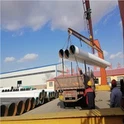
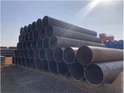
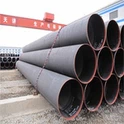
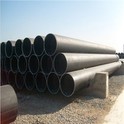
As a supplier of Euro Underground Pile, I've witnessed firsthand the dynamic nature of the piling industry across different countries. Euro Underground Pile, which you can learn more about Euro Underground Pile, plays a crucial role in various construction projects, from small - scale buildings to large infrastructure developments. One of the key aspects that significantly impact the supply and use of these piles is the regulatory environment in different countries.
Regulations in European Countries
In Europe, the regulatory framework for Euro Underground Pile is relatively well - structured. The European Union has set out a series of standards and regulations to ensure the quality, safety, and environmental friendliness of construction materials, including piling pipes. For example, the EN10219 standard, specifically EN10219 S355J0H, is widely recognized and followed. This standard defines the technical delivery conditions for cold - formed welded structural hollow sections of non - alloy and fine - grain steels. It covers aspects such as chemical composition, mechanical properties, and dimensional tolerances.
Countries within the EU are required to enforce these standards in their construction projects. For instance, in Germany, a country known for its high - quality construction, strict adherence to European standards is mandatory. German construction companies rely on these regulations to ensure the durability and safety of their buildings. The German government also conducts regular inspections to verify that all piling materials used in construction sites meet the required standards. This not only protects the end - users but also promotes fair competition in the market by ensuring that all suppliers are on an equal footing.
In the United Kingdom, even after Brexit, the construction industry still largely adheres to European standards, especially in the short to medium term. The UK has its own set of regulations that align closely with the EU's standards. For example, the Building Regulations in the UK cover a wide range of aspects related to construction, including the use of piling materials. These regulations ensure that buildings are safe, energy - efficient, and accessible. Euro Underground Pile suppliers in the UK need to ensure that their products meet both the UK's specific requirements and the relevant European standards to be competitive in the market.


Regulations in Asian Countries
In Asia, the regulatory landscape for Euro Underground Pile varies significantly from country to country. In Japan, a country with a high - seismic activity, the regulations for piling materials are extremely strict. Japanese construction standards focus on the ability of piling materials to withstand earthquakes. The Japan Society of Civil Engineers (JSCE) has developed detailed guidelines for piling design and construction. These guidelines specify the required strength, deformation capacity, and corrosion resistance of piling materials.
For example, Euro Underground Pile used in Japanese construction projects need to have a high yield strength and excellent ductility to resist the lateral forces generated during an earthquake. Japanese construction companies often conduct their own in - house tests in addition to the standard compliance tests to ensure the quality of the piling materials. This high - level of scrutiny makes it challenging for international suppliers to enter the Japanese market, but it also ensures the safety of Japanese buildings.
In China, the construction industry is booming, and the demand for Euro Underground Pile is increasing. The Chinese government has established a comprehensive set of standards and regulations for construction materials. The Chinese National Standards (GB) cover a wide range of aspects, including the chemical composition, mechanical properties, and manufacturing processes of piling materials. Chinese suppliers are required to obtain relevant certifications to prove that their products meet these standards.
Moreover, as China is committed to environmental protection, there are also regulations regarding the environmental impact of construction materials. Euro Underground Pile suppliers need to ensure that their products are manufactured in an environmentally friendly way, with proper waste management and energy - saving measures.
Regulations in North American Countries
In North America, the United States and Canada have their own regulatory systems for Euro Underground Pile. In the United States, the American Society for Testing and Materials (ASTM) sets the standards for construction materials. These standards are widely used in the construction industry across the country. ASTM standards for piling materials cover aspects such as material properties, testing methods, and installation procedures.
For example, ASTM A500 is a well - known standard for cold - formed welded and seamless carbon steel structural tubing. Construction projects in the US often require piling materials to meet this standard. Additionally, local building codes in different states may have additional requirements. For instance, in California, due to its high seismic activity, there are more stringent requirements for the seismic performance of piling materials.
In Canada, the Canadian Standards Association (CSA) is responsible for setting the standards for construction materials. The CSA standards for piling materials are similar to those in the US in many aspects but also take into account the unique geographical and environmental conditions in Canada, such as the cold climate in many parts of the country. Canadian construction companies need to ensure that the Euro Underground Pile they use meet both the CSA standards and the local building codes.
Impact of Regulations on the Supplier
As a Euro Underground Pile supplier, these regulations have a profound impact on our business. On one hand, they ensure that our products are of high quality and meet the safety requirements of different markets. This helps us build a good reputation and gain the trust of our customers. For example, by complying with the EN10219 S355J0H standard, we can provide our European customers with piling materials that are reliable and durable.
On the other hand, these regulations also pose challenges. We need to invest a significant amount of time and resources in research and development to ensure that our products meet the ever - changing regulatory requirements. For instance, when a new standard is introduced in a particular country, we need to adjust our manufacturing processes and testing methods accordingly. This may require us to purchase new equipment and train our employees.
In addition, different regulations in different countries mean that we need to have a deep understanding of the local market. We need to establish good relationships with local regulatory authorities and certification bodies to ensure a smooth entry into the market. This also requires us to have a flexible business strategy to adapt to different regulatory environments.
Conclusion and Call to Action
In conclusion, the regulations for Euro Underground Pile vary significantly across different countries. These regulations play a crucial role in ensuring the quality, safety, and environmental friendliness of construction projects. As a supplier, we are committed to meeting these regulations and providing our customers with high - quality European Piling Pipe.
If you are interested in our Euro Underground Pile products and would like to discuss your specific requirements, we welcome you to reach out to us. Whether you are in Europe, Asia, North America, or any other part of the world, we have the expertise and resources to meet your needs. Let's work together to ensure the success of your construction projects.
References
- European Committee for Standardization (CEN). EN10219 - 1:2006. Cold - formed welded structural hollow sections of non - alloy and fine - grain steels - Part 1: Technical delivery conditions.
- Japan Society of Civil Engineers (JSCE). Guidelines for Piling Works.
- Chinese National Standards (GB). Relevant standards for construction materials.
- American Society for Testing and Materials (ASTM). ASTM A500. Standard Specification for Cold - Formed Welded and Seamless Carbon Steel Structural Tubing in Rounds and Shapes.
- Canadian Standards Association (CSA). Relevant standards for construction materials.