


Hey there! As a supplier of AS 1163 C350 pipe piles, I often get asked about how to calculate the horizontal displacement of these bad boys. So, I thought I'd put together this blog post to break it down for you in a way that's easy to understand.

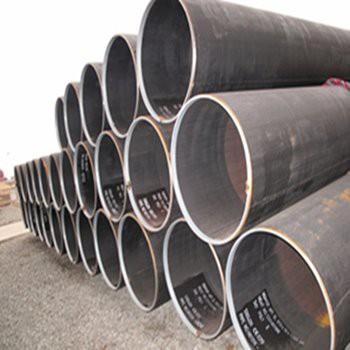
First off, let's talk a bit about what AS 1163 C350 pipe piles are. These are high - strength steel pipe piles that are widely used in construction projects. They're known for their durability and ability to withstand heavy loads. Whether you're building a small bridge or a large commercial building, AS 1163 C350 pipe piles can be a great choice.
Now, onto the main topic: calculating the horizontal displacement. There are a few different methods you can use, and I'll go through the most common ones.
1. The Elastic Method
The elastic method is one of the simplest ways to calculate horizontal displacement. It assumes that the soil around the pile behaves elastically. This means that when a load is applied to the pile, the soil will deform in a way that's proportional to the load.
The basic formula for calculating horizontal displacement using the elastic method is:
[ \delta_h=\frac{H L^3}{3 E I} ]
where:
- (\delta_h) is the horizontal displacement at the top of the pile.
- (H) is the horizontal load applied to the pile.
- (L) is the length of the pile embedded in the soil.
- (E) is the modulus of elasticity of the pile material. For AS 1163 C350 pipe piles, the modulus of elasticity is typically around (200\times10^3) MPa.
- (I) is the moment of inertia of the pile cross - section. You can calculate the moment of inertia for a circular pipe using the formula (I=\frac{\pi}{64}(D^4 - d^4)), where (D) is the outer diameter of the pipe and (d) is the inner diameter.
However, this method has its limitations. It doesn't take into account the non - linear behavior of the soil, which can be significant in some cases. For example, if the soil is soft or if the load is very large, the soil may start to yield, and the elastic method won't give accurate results.
2. The Subgrade Reaction Method
The subgrade reaction method is a more advanced approach that takes into account the interaction between the pile and the soil. In this method, the soil is modeled as a series of springs that resist the deformation of the pile.
The horizontal displacement of the pile is calculated by solving a differential equation that describes the equilibrium of the pile under the applied load and the soil reaction. The soil reaction is assumed to be proportional to the displacement of the pile at each point along its length.
The equation for the soil reaction is (p = k_y y), where (p) is the soil reaction per unit length of the pile, (k_y) is the subgrade reaction modulus, and (y) is the horizontal displacement of the pile at a particular depth.
To solve the differential equation, you'll need to know the value of the subgrade reaction modulus (k_y). This value can vary depending on the type of soil. For example, in sandy soil, (k_y) may be in the range of (10 - 100) MN/m³, while in clay soil, it may be lower.
There are several ways to determine the subgrade reaction modulus. One common method is to conduct in - situ tests, such as the plate load test or the pressuremeter test. You can also use empirical correlations based on soil properties, like the soil density and the angle of internal friction.
3. Finite Element Analysis
Finite element analysis (FEA) is the most accurate but also the most complex method for calculating horizontal displacement. In FEA, the pile and the soil are modeled as a series of small elements, and the behavior of each element is analyzed using the principles of mechanics.
This method allows you to take into account all the factors that can affect the horizontal displacement, such as the non - linear behavior of the soil, the interaction between the pile and the soil, and the geometry of the pile and the surrounding soil.
However, FEA requires specialized software and a good understanding of engineering mechanics. You'll need to define the material properties of the pile and the soil, the boundary conditions, and the applied load. Then, the software will solve the equations of equilibrium and calculate the displacement of the pile.
Now, when you're calculating the horizontal displacement, it's important to consider other factors as well. For example, the type of loading can have a big impact. If the load is static, the calculations will be different from if the load is dynamic, like in the case of an earthquake or a wind load.
Also, the installation method of the pile can affect its horizontal displacement. If the pile is driven into the soil, it can cause soil disturbance, which can change the properties of the soil around the pile. On the other hand, if the pile is drilled, the soil disturbance may be less.
When you're in the market for pipe piles, you might also come across other types, like EN 10219 Structure Pipe and ASTM A252 Grade 3 Mild Steel Pipe Piles. These are different standards, and each has its own characteristics. The EN 10219 structure pipe is often used in European construction projects, while the ASTM A252 Grade 3 mild steel pipe piles are popular in North America.
Another related product is the Undergroud Pile. These piles are designed to be buried underground and are used in various foundation applications.
As a supplier of AS 1163 C350 pipe piles, I can offer you high - quality products at competitive prices. If you're working on a project that requires pipe piles and you need help with calculating the horizontal displacement or any other technical aspects, I'm here to assist. Whether you're a contractor, an engineer, or an architect, we can have a detailed discussion about your requirements and find the best solution for your project.
If you're interested in purchasing AS 1163 C350 pipe piles or want to learn more about them, feel free to reach out. We can start a conversation about your project, and I'll do my best to provide you with all the information you need to make an informed decision.
References
- Das, B. M. (2016). Principles of Foundation Engineering. Cengage Learning.
- Poulos, H. G., & Davis, E. H. (1980). Pile Foundation Analysis and Design. John Wiley & Sons.
- Broms, B. B. (1964). Lateral resistance of piles in cohesive soils. Journal of the Soil Mechanics and Foundations Division, 90(3), 27 - 63.


