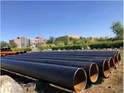
Hey there! As a supplier of structural steel pipes, I've seen firsthand the incredible impact these pipes have on offshore structures. In this blog, I'm gonna dive into the various applications of structural steel pipes in the offshore world.
Foundation Support
One of the primary uses of structural steel pipes in offshore structures is for foundation support. Offshore platforms, whether they're oil and gas rigs or wind turbines, need a stable base to withstand the harsh marine environment. Structural steel pipes, often in the form of piles, are driven deep into the seabed to provide this stability.
These piles act as the legs of the platform, transferring the weight of the structure and any loads it experiences, like wind, waves, and currents, to the underlying soil. The steel pipes are designed to have high strength and durability to resist corrosion and the forces exerted on them over time. For instance, ASTM A252 Grade 2 Piling Pipe is a popular choice due to its excellent mechanical properties and ability to handle heavy loads.
Jacket Structures
Jacket structures are another crucial application of structural steel pipes in offshore projects. These are large, lattice-like frameworks that support the topside facilities of an offshore platform. The steel pipes are welded together to form the legs, braces, and other components of the jacket.
The design of jacket structures allows them to be flexible enough to absorb the dynamic forces from the waves and wind while remaining rigid enough to maintain the integrity of the platform. The use of structural steel pipes in jackets provides a cost - effective and efficient solution for offshore construction. They can be fabricated onshore and then transported to the installation site, reducing the time and complexity of the construction process.
Pipeline Systems
Offshore pipeline systems are essential for transporting oil, gas, and other fluids from the production site to onshore facilities. Structural steel pipes are the go - to material for these pipelines due to their high strength, corrosion resistance, and ability to withstand high pressures.
The pipes are connected together using various welding and joining techniques to form a continuous pipeline. They are also coated with protective materials to prevent corrosion from the seawater and the transported fluids. The pipeline systems are often buried in the seabed or laid on the seafloor, and the structural steel pipes are designed to handle the stresses associated with these installation methods.
Mooring Systems
Mooring systems are used to keep floating offshore structures, such as floating production storage and offloading (FPSO) vessels and floating wind turbines, in place. Structural steel pipes can be used in the construction of mooring components like anchor piles and chains.
The anchor piles, which are made of steel pipes, are driven into the seabed to provide a fixed point for the mooring lines. The strength and stability of the steel pipes ensure that the mooring system can withstand the forces exerted by the floating structure and the surrounding environment. This helps to prevent the structure from drifting away and ensures its safe operation.
Subsea Structures
Subsea structures, such as wellheads, manifolds, and risers, also rely on structural steel pipes. Wellheads are the equipment at the surface of an oil or gas well, and they are often made of steel pipes to provide a strong and secure connection between the wellbore and the production facilities.
Manifolds are used to collect and distribute fluids from multiple wells, and they are constructed using steel pipes to form the piping network. Risers are the pipes that connect the subsea wells to the surface facilities, and they need to be able to withstand the high pressures and dynamic forces in the subsea environment. The use of structural steel pipes in subsea structures ensures their reliability and long - term performance.
Advantages of Using Structural Steel Pipes in Offshore Structures
There are several reasons why structural steel pipes are the preferred choice for offshore applications. Firstly, steel has high strength - to - weight ratio, which means that the pipes can support heavy loads while being relatively lightweight. This makes them easier to transport and install compared to other materials.
Secondly, steel is highly durable and can resist corrosion when properly coated and maintained. This is crucial in the harsh offshore environment where the structures are constantly exposed to seawater, salt spray, and other corrosive elements.
Thirdly, steel pipes can be easily fabricated into various shapes and sizes to meet the specific requirements of different offshore projects. They can be cut, welded, and bent to create complex structures, which gives engineers more flexibility in their design.


Challenges and Solutions
While structural steel pipes offer many advantages in offshore applications, there are also some challenges. One of the main challenges is corrosion. As mentioned earlier, the offshore environment is highly corrosive, and if not properly addressed, corrosion can significantly reduce the lifespan of the steel pipes.
To combat corrosion, the pipes are often coated with anti - corrosion paints, epoxy coatings, or other protective materials. Cathodic protection systems can also be used to further protect the pipes from corrosion. Another challenge is the installation process, which can be difficult and expensive due to the harsh offshore conditions.
Advanced installation techniques, such as using specialized vessels and equipment, are employed to overcome these challenges. For example, pile driving vessels are used to drive the piles into the seabed, and pipelay vessels are used to install the pipelines.
Conclusion
In conclusion, structural steel pipes play a vital role in offshore structures. From foundation support to pipeline systems, mooring systems, and subsea structures, they are used in almost every aspect of offshore construction. Their high strength, durability, and flexibility make them the ideal choice for the harsh and demanding offshore environment.
If you're involved in an offshore project and are looking for high - quality structural steel pipes, don't hesitate to reach out. We have a wide range of products, including Port Building Pile and High Building Structure Pipe, to meet your specific needs. We can provide you with the right solutions and support for your project. Let's start a conversation and see how we can work together to make your offshore project a success.
References
- API RP 2A-WSD, "Recommended Practice for Planning, Designing, and Constructing Fixed Offshore Platforms - Working Stress Design".
- DNV - OS - J101, "Design of Floating Production Systems".
- ISO 13628 - 1, "Petroleum and natural gas industries - Design and operation of sub - sea production systems - Part 1: General requirements and recommendations".