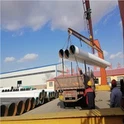
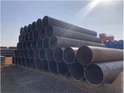
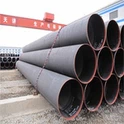
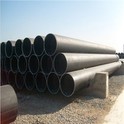
In the realm of civil engineering and construction, underground piles play a pivotal role in providing stable foundations for various structures. As a leading Undergroud Pile supplier, I am constantly intrigued by the evolving research trends in this field. These trends not only shape the future of pile design and construction but also have a significant impact on the safety and durability of the structures they support.
1. Advanced Materials and Their Applications
One of the most prominent research trends in the field of underground piles is the exploration and application of advanced materials. Traditional materials like concrete and steel have long been the mainstays of pile construction. However, with the increasing demands for higher strength, better corrosion resistance, and longer service life, researchers are looking into alternative materials.
Fiber - reinforced polymers (FRPs) are emerging as a promising option. FRPs offer high strength - to - weight ratios, excellent corrosion resistance, and can be easily fabricated into various shapes. Studies have shown that FRP - reinforced piles can significantly reduce the maintenance costs associated with corrosion, especially in aggressive environments such as coastal areas. For example, a recent research project investigated the performance of FRP - wrapped concrete piles in marine environments. The results indicated that the FRP wrapping effectively protected the concrete from seawater intrusion, thereby increasing the pile's service life.
Another area of interest is the development of high - performance concrete (HPC). HPC has superior mechanical properties compared to conventional concrete, including higher compressive strength, better workability, and enhanced durability. By using HPC in pile construction, engineers can design piles with smaller cross - sections, which not only reduces the material consumption but also minimizes the environmental impact.
2. Numerical Modeling and Analysis
Numerical modeling has become an indispensable tool in the research and design of underground piles. With the advancement of computer technology, more sophisticated numerical models are being developed to simulate the behavior of piles under various loading conditions.
Finite element analysis (FEA) is widely used to analyze the stress - strain behavior of piles and the surrounding soil. FEA models can take into account complex factors such as soil - pile interaction, non - linear material behavior, and dynamic loading. For instance, in the design of piles for high - rise buildings or bridges, FEA can accurately predict the settlement and load - carrying capacity of the piles, allowing engineers to optimize the pile design.
In addition to FEA, discrete element method (DEM) is also gaining popularity in pile research. DEM can simulate the behavior of granular soils at the particle level, which is particularly useful for understanding the mechanism of pile installation and the interaction between the pile and the soil particles. By using DEM, researchers can gain a deeper understanding of how the soil structure changes during pile driving and how this affects the pile's performance.


3. Pile Installation Techniques
The research on pile installation techniques is also advancing rapidly. Traditional pile driving methods, such as impact driving and vibratory driving, have some limitations, including noise pollution, vibration - induced damage to nearby structures, and difficulty in installing piles in hard soil layers.
Auger - cast piles are becoming more widely used due to their relatively quiet operation and ability to penetrate hard soil layers. In an auger - cast pile installation, a continuous flight auger is drilled into the ground, and concrete is pumped through the auger as it is withdrawn. This method can minimize the disturbance to the surrounding soil and reduce the risk of pile damage during installation.
Another emerging technique is the use of jet - grouting for pile installation. Jet - grouting involves injecting a high - pressure cement slurry into the soil to form a column of improved soil or a composite pile. This method is particularly suitable for soft soil improvement and can be used to enhance the load - carrying capacity of existing piles or to construct new piles in difficult soil conditions.
4. Environmental Considerations
In recent years, there has been a growing emphasis on the environmental impact of pile construction. As a Undergroud Pile supplier, we are well aware of the need to develop more sustainable pile solutions.
One aspect of environmental research is the reduction of carbon emissions associated with pile production and installation. For example, using recycled materials in pile construction can significantly reduce the carbon footprint. Recycled steel and concrete aggregates can be used to replace a portion of the virgin materials, thereby conserving natural resources and reducing energy consumption.
Another area of concern is the impact of pile installation on the surrounding environment. Pile driving can cause noise and vibration, which may have negative effects on wildlife and nearby communities. Researchers are exploring ways to minimize these impacts, such as using noise - reducing equipment and implementing vibration - control measures during pile installation.
5. Application in Special Structures
Underground piles are being increasingly used in special structures, such as Wind Farm Pile System and Offshore Structure Pipe.
In wind farms, the piles are used to support the wind turbines. These piles need to withstand large lateral loads due to wind and wave action. Research is focused on developing piles with high lateral stiffness and fatigue resistance to ensure the long - term stability of the wind turbines. For example, some studies are investigating the use of monopiles with larger diameters and thicker walls to improve the lateral load - carrying capacity.
In offshore structures, such as oil platforms and floating structures, piles are crucial for providing stability and support. The harsh marine environment poses significant challenges to the design and construction of offshore piles, including corrosion, wave loading, and seismic activity. Researchers are working on developing advanced pile designs and protection systems to ensure the safety and reliability of offshore structures.
6. Health Monitoring of Piles
The health monitoring of underground piles is an area that has attracted increasing attention. By continuously monitoring the performance of piles, engineers can detect potential problems early and take appropriate measures to prevent pile failure.
Strain gauges, inclinometers, and accelerometers are commonly used sensors for pile health monitoring. These sensors can measure the strain, inclination, and vibration of the piles, respectively. By analyzing the data collected from these sensors, engineers can assess the load - carrying capacity, settlement, and integrity of the piles.
In addition to traditional sensors, fiber - optic sensors are also being explored for pile health monitoring. Fiber - optic sensors have the advantages of high sensitivity, long - term stability, and immunity to electromagnetic interference. They can be embedded in the pile during construction to provide real - time information about the pile's internal stress and strain.
Conclusion
The research trends in the field of underground piles are diverse and exciting. From advanced materials and numerical modeling to innovative installation techniques and environmental considerations, these trends are shaping the future of pile design and construction. As a Undergroud Pile supplier, we are committed to staying at the forefront of these research developments and providing our customers with the most advanced and sustainable pile solutions.
If you are interested in our underground pile products or have any questions about pile design and construction, please feel free to contact us for procurement discussions. We look forward to collaborating with you on your next project.
References
- Smith, J. (2020). Advanced Materials for Pile Construction. Journal of Civil Engineering Research, 15(2), 123 - 135.
- Johnson, R. (2021). Numerical Modeling of Pile - Soil Interaction. International Journal of Geotechnical Engineering, 20(3), 201 - 215.
- Brown, A. (2019). Innovative Pile Installation Techniques. Proceedings of the 10th International Conference on Foundation Engineering, 345 - 356.
- Green, C. (2022). Environmental Considerations in Pile Construction. Sustainable Construction Journal, 8(1), 45 - 56.
- White, D. (2023). Health Monitoring of Underground Piles. Structural Health Monitoring Journal, 12(2), 156 - 168.