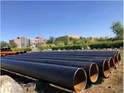
Hey there! I'm a supplier of LSAW (Longitudinal Submerged Arc Welded) steel pipes. Today, I wanna chat about a super important topic in our industry: what's the welding voltage for LSAW steel pipe production?
First off, let's understand the basics. LSAW steel pipes are widely used in various industries like oil and gas, construction, and infrastructure. They're made by welding a steel plate along its length using the submerged arc welding process. And the welding voltage plays a crucial role in this whole process.
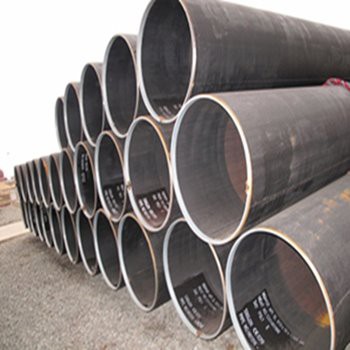

The welding voltage affects several aspects of the weld quality. A proper voltage helps in achieving good fusion between the base metal and the filler metal. If the voltage is too low, the arc might be unstable, and we won't get a proper weld bead. It could lead to issues like lack of fusion, where the metals don't bond well together. On the other hand, if the voltage is too high, it can cause excessive spatter, burn - through of the pipe wall, and a wider and shallower weld bead, which might not have the required strength.
So, what's the ideal welding voltage? Well, it depends on a few factors. One of the main factors is the thickness of the steel plate used to make the pipe. For thinner plates, usually, a lower welding voltage is sufficient. For example, if we're working with a plate that's around 6 - 10 mm thick, the welding voltage might range from 28 - 32 volts. This lower voltage helps in controlling the heat input and preventing the plate from getting over - heated and warping.
As the plate thickness increases, we need to increase the welding voltage. When dealing with plates that are 15 - 20 mm thick, the voltage could be in the range of 32 - 36 volts. The higher voltage provides more energy to penetrate through the thicker metal and ensure proper fusion throughout the thickness of the plate.
Another factor that affects the welding voltage is the type of welding wire and flux we use. Different welding wires and fluxes have different electrical conductivity and melting characteristics. Some wires are designed to work better at lower voltages, while others can handle higher voltages. For instance, a wire with a higher carbon content might require a slightly different voltage compared to a low - carbon wire. The flux also plays a role in stabilizing the arc and controlling the heat distribution. A high - quality flux can allow for a more consistent welding process at a specific voltage range.
The welding speed also has an impact on the welding voltage. If we're welding at a high speed, we might need to increase the voltage slightly to maintain the same level of heat input per unit length of the weld. Conversely, if the welding speed is slow, a lower voltage might be appropriate to avoid over - heating the area.
Now, let's talk about the benefits of getting the welding voltage right. When we have the correct welding voltage, we produce high - quality LSAW steel pipes. These pipes have better mechanical properties, such as higher tensile strength and better corrosion resistance. They're also more reliable in the long run, which is crucial for applications like Undergroud Pile. In underground pile applications, the pipes need to withstand high loads and harsh environmental conditions. A well - welded pipe with the right voltage ensures that it can perform its job effectively.
Our LSAW steel pipes are also used in structural applications like EN10219 S355J0H Structural Pipe. In these cases, the quality of the weld directly affects the overall structural integrity of the building or infrastructure. By carefully controlling the welding voltage, we can guarantee that our pipes meet the strict quality standards required for such applications.
And for applications where corrosion is a concern, like in some water or chemical transportation systems, we offer 2PE Anti - corrosion Steel Pipe. The quality of the weld is still important here because any defects in the weld can be a starting point for corrosion. A proper welding voltage helps in creating a smooth and defect - free weld, which in turn enhances the effectiveness of the anti - corrosion coating.
At our company, we have a team of experienced welders and technicians who are well - trained in adjusting the welding voltage according to different production requirements. We use advanced welding equipment that allows for precise control of the voltage. Before starting the production of a batch of pipes, we conduct thorough tests to determine the optimal welding voltage based on the specific plate thickness, wire type, and other factors.
We also continuously monitor the welding process during production. Our quality control team checks the welds regularly to ensure that the voltage is being maintained at the right level. If there are any deviations, we make immediate adjustments to guarantee the consistency and quality of our LSAW steel pipes.
If you're in the market for high - quality LSAW steel pipes, we'd love to have a chat with you. Whether you need pipes for underground piles, structural applications, or anti - corrosion projects, we have the expertise and the production capabilities to meet your needs. Contact us to start a discussion about your specific requirements and let's work together to find the best solutions for your projects.
References
- Welding Handbook, American Welding Society
- "Submerged Arc Welding Technology" by various industry experts