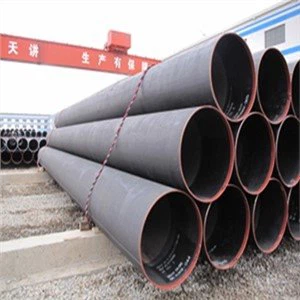
Unlike ordinary single-type anti-corrosion coatings, 3PE is a composite protective structure composed of three layers of materials with distinct functions. Each layer has a specific purpose, compensating for each other's weaknesses and working together to form a complete protective system. This is the key reason why it far surpasses traditional anti-corrosion processes.
The bottom layer, tightly adhering to the steel pipe, is a fusion-bonded epoxy powder layer, which is the foundation of the entire protective structure. It forms stable chemical bonds with the steel surface, exhibiting extremely strong adhesion. This layer is primarily responsible for resisting chemical corrosion, isolating water, oxygen, and various corrosive ions, while effectively solving the common cathodic disbondment problem in the industry, protecting the substrate from the source. Simply put, it's like a close-fitting protective layer for the pipeline, guarding the first line of defense against corrosion.
Triple-layer Polyethlene Anti-corrosion Coating Standards and Construction Points
Standards: GB/T 23257-2017 "Polyethylene Anti-corrosion Coating for Buried Steel Pipelines", SY/T 0413-2002, DIN 30670, etc.
Surface Treatment: Steel pipes must be sandblasted to Sa2.5 grade, with an anchor pattern of 40–100 μm.
Process: Wrapping or circular mold coating, with all three components fused together in one step.
Joint Repair: Field welds often use heat-shrinkable tape/sleeves or liquid epoxy, requiring spark leak testing (15–25 kV).
Note: Heat-shrinkable sleeves or FBE are commonly used as alternatives for bends; avoid scratching with sharp stones during transportation and backfilling.
If you require information on type selection (standard/reinforced), pipe diameter matching thickness, or joint repair schemes for Triple-layer Polyethlene Anti-corrosion Coating, please provide specific working conditions (medium, pipe diameter, soil environment), and I will calculate the parameters according to the standards. Thickness Standards and Classifications: According to national standards (such as GB/T 23257-2017), 3PE anti-corrosion coatings are classified into ordinary and reinforced grades based on total thickness:
Ordinary Grade: Total thickness ranges from 2.0-2.2mm, suitable for ordinary buried pipeline projects with low corrosivity and low environmental pressure..
Reinforced Grade: Total thickness ranges from 2.7-3.7mm, suitable for highly corrosive environments (such as marine engineering, chemical plants), high-pressure transmission pipelines, and scenarios requiring long service life.
Reference thicknesses for each layer (taking reinforced grade as an example): Bottom layer epoxy powder: 50-127μm; Middle layer adhesive: 170-250μm; Outer layer polyethylene: 2.7-3.0mm.
Core Advantages of Triple-layer Polyethlene Anti-corrosion Coating:
Superior Anti-corrosion Performance: Blocks contact between moisture, oxygen, microorganisms, and other media and the steel pipe surface at the source, preventing electrochemical or chemical corrosion.
Long service life: Normal service life can reach 30 to 50 years, far exceeding ordinary anti-corrosion coatings, offering high cost-effectiveness throughout its entire life cycle.
High mechanical strength: The outer polyethylene layer effectively resists construction and handling collisions, soil settlement, and external pressure, reducing damage to the anti-corrosion structure.
High construction flexibility: In addition to factory prefabrication, hand-wrapped 3PE can be applied manually on-site, without limitations on pipe diameter or fitting shape, making it particularly suitable for complex scenarios such as large-diameter steel pipes, repairing irregularly shaped pipe fittings, and repairing old pipelines.
In summary, the reason why Triple-layer Polyethlene Anti-corrosion Coating has long held a mainstream position in the pipeline anti-corrosion market is not because of a single superior performance aspect, but because its overall comprehensive performance is irreplaceable. The bottom epoxy powder locks in the anti-corrosion foundation, the middle adhesive stabilizes the overall structure, and the outer polyethylene provides strong physical protection. The three-layer structure complements each other, perfectly solving the two core problems faced by underground pipelines: chemical corrosion and physical damage. While 3PE has a higher initial investment and a more complex construction process compared to ordinary anti-corrosion materials, its long service life of several decades and extremely low failure rate significantly reduce the additional expenses for later maintenance and pipeline replacement. For projects with extremely high requirements for pipeline safety and stability, such as oil and gas transportation, city gas, and chemical engineering, the short-term cost premium is entirely worthwhile. Under current industry conditions, three-layer polyethylene anti-corrosion coating remains the most reliable and cost-effective option for long-term corrosion protection of buried steel pipelines.
Hot Tags: triple-layer polyethlene anti-corrosion coating, China, suppliers, manufacturers, factory, wholesale, cheap, discount