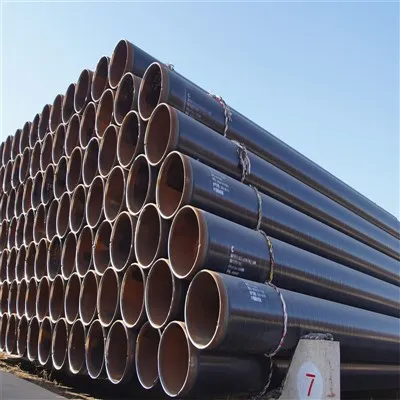
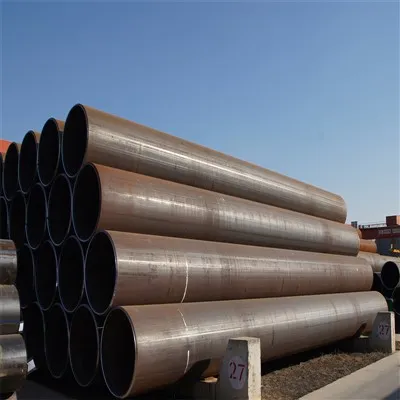
The most prominent advantage of LSAW (Laminated Steel Wire Arrangement) pipelines lies in their superior structural integrity and mechanical properties, laying the foundation for the safety of oil and gas transportation. LSAW pipelines are constructed by rolling steel plates and then welding them with a straight longitudinal seam. This structure ensures a more uniform stress distribution when the pipeline is subjected to internal pressure. Compared to the spiral weld of spiral welded pipes, the straight seam avoids the stress concentration problem caused by the angle between the weld and the pipeline axis, significantly reducing the risk of weld cracking during high-pressure transportation. Furthermore, LSAW pipelines are produced using high-quality, thick steel plates as raw materials. The chemical composition and mechanical properties of these steel plates are more stable. Combined with the mature application of submerged arc welding technology, the weld quality is easy to control, and the strength and toughness of the welded joints meet or even exceed the standards of the base material. During oil and gas transportation, especially under harsh conditions such as high pressure and low temperature, LSAW pipelines can effectively resist the corrosion and pressure shock of oil and gas media, reducing the occurrence of safety accidents such as leaks and pipe bursts, and ensuring the continuity and safety of oil and gas transportation.
The adaptability to large diameters and high pressures is a key advantage of LSAW pipelines in long-distance oil and gas transportation projects. As global oil and gas resource development extends to deeper waters and remote areas, the demand for long-distance, high-flow-rate oil and gas transportation is increasing, placing higher demands on pipeline diameters and pressure ratings. LSAW pipelines can be produced in larger diameters, which effectively reduces frictional resistance during transportation, increases flow rate, and reduces the number of auxiliary facilities such as pump stations and compressor stations, thereby lowering the construction and operating costs of the entire transportation system. Furthermore, LSAW pipelines have high pressure ratings, meeting the needs of high-pressure oil and gas transportation and are suitable for high-pressure conditions such as long-distance natural gas pipelines and crude oil pipelines.
The manufacturing process of LSAW pipelines is relatively mature, employing continuous rolling and straight-seam submerged arc welding, resulting in high production efficiency and enabling large-scale production. Large-scale production not only reduces unit production costs but also ensures consistent product quality. Compared to seamless steel pipes, LSAW pipelines use steel plates as raw materials, resulting in relatively lower raw material procurement costs and a simpler production process, reducing energy consumption and material waste during production. Furthermore, LSAW pipelines utilize submerged arc welding, which offers fast welding speeds, stable weld quality, and relatively low subsequent inspection and repair costs. In addition, LSAW pipelines have a longer service life; their corrosion resistance and structural stability reduce the frequency of maintenance and replacement, lowering operational maintenance costs and further improving the economics of oil and gas transportation projects.
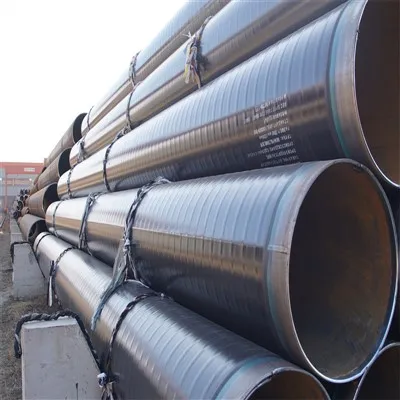
Good corrosion resistance and environmental adaptability are crucial for the stable operation of LSAW pipelines in complex oil and gas transportation environments. Oil and gas media often contain corrosive components such as hydrogen sulfide, carbon dioxide, and water, and oil and gas pipelines often need to traverse complex geological and climatic environments such as deserts, Gobi, oceans, and permafrost, posing severe challenges to the pipeline's corrosion resistance and environmental adaptability. LSAW pipelines can employ various anti-corrosion treatments during production, such as external anti-corrosion coatings (3PE, FBE, etc.), internal anti-corrosion coatings, and cathodic protection, effectively resisting various forms of corrosion, including soil corrosion, seawater corrosion, and oil and gas media corrosion. Furthermore, the steel plates used in LSAW pipelines undergo rigorous quality control, possessing excellent low-temperature toughness and fatigue resistance, enabling them to withstand the low-temperature environments of cold regions and the impacts of geological disasters such as earthquakes and subsidence. In complex environments such as marine oil and gas transportation and desert oil and gas transportation, LSAW pipelines can operate stably, reducing pipeline failures caused by environmental factors and ensuring the safe and reliable transportation of oil and gas.