


As a supplier of ASTM A252 Grade 3 Pipe, ensuring the quality of our products is of utmost importance. ASTM A252 Grade 3 Pipe is widely used in various industries, especially in the construction of piles for bridges, buildings, and offshore structures due to its high strength and good weldability. In this blog, I will share some key aspects that we focus on to guarantee the quality of ASTM A252 Grade 3 Pipe.
Raw Material Selection
The quality of ASTM A252 Grade 3 Pipe starts with the selection of raw materials. We source our steel from reputable mills that have a proven track record of producing high - quality steel. These mills are required to provide detailed material certificates, which include information such as chemical composition, mechanical properties, and heat treatment history.
The chemical composition of the steel is carefully analyzed to ensure it meets the ASTM A252 Grade 3 specifications. The steel should have the right balance of elements such as carbon, manganese, silicon, sulfur, and phosphorus. For example, carbon content affects the strength and hardness of the steel. Too much carbon can make the steel brittle, while too little may result in insufficient strength. Manganese helps improve the hardenability and ductility of the steel.
We also conduct in - house testing on the raw materials. This includes tensile tests, impact tests, and hardness tests. Tensile tests measure the maximum stress the steel can withstand before breaking, which is crucial for determining the pipe's load - bearing capacity. Impact tests assess the steel's ability to absorb energy under sudden loading, which is important in applications where the pipe may be subjected to dynamic forces. Hardness tests help ensure that the steel has the appropriate hardness for its intended use.
Manufacturing Process Control
The manufacturing process of ASTM A252 Grade 3 Pipe is a critical factor in determining its quality. We use advanced manufacturing techniques and equipment to ensure precision and consistency.
Pipe Forming
The first step in manufacturing the pipe is forming the steel into a tubular shape. We use either the seamless or welded process. For welded pipes, we use high - quality welding techniques such as submerged arc welding (SAW). SAW provides a high - quality weld with good penetration and low porosity. During the welding process, we closely monitor the welding parameters such as welding current, voltage, and welding speed. Any deviation from the optimal parameters can lead to welding defects such as lack of fusion, porosity, or cracks.
Heat Treatment
Heat treatment is an important step in improving the mechanical properties of the pipe. After forming, the pipe may undergo processes such as normalizing, quenching, and tempering. Normalizing helps refine the grain structure of the steel, improving its strength and toughness. Quenching and tempering can further enhance the hardness and strength of the pipe. We carefully control the temperature and time during heat treatment to ensure that the desired properties are achieved.
Sizing and Straightening
After heat treatment, the pipe is sized to the required dimensions. This involves reducing the diameter and wall thickness to the specified tolerances. We use precision sizing equipment to ensure accurate dimensions. Straightening is also carried out to ensure that the pipe is straight and free from any bends or twists. A straight pipe is essential for proper installation and performance in various applications.
Quality Inspection
Quality inspection is a continuous process throughout the manufacturing of ASTM A252 Grade 3 Pipe. We have a comprehensive quality control system in place to detect and eliminate any defects.
Visual Inspection
Visual inspection is the first line of defense in quality control. Our inspectors visually examine the pipe for surface defects such as scratches, cracks, pits, and unevenness. Surface defects can not only affect the appearance of the pipe but also reduce its corrosion resistance and structural integrity.
Non - Destructive Testing (NDT)
We also use non - destructive testing methods to detect internal defects in the pipe. These methods include ultrasonic testing (UT), magnetic particle testing (MT), and radiographic testing (RT). UT uses high - frequency sound waves to detect internal flaws such as cracks and inclusions. MT is used to detect surface and near - surface defects in ferromagnetic materials. RT uses X - rays or gamma rays to create an image of the internal structure of the pipe, allowing us to identify any hidden defects.

Hydrostatic Testing
Hydrostatic testing is a crucial test for ASTM A252 Grade 3 Pipe. The pipe is filled with water and pressurized to a specified level for a certain period of time. This test helps ensure the pipe's pressure - holding capacity and the integrity of its welds. Any leaks or failures during hydrostatic testing indicate a problem with the pipe's quality.
Storage and Transportation
Proper storage and transportation are also important to maintain the quality of ASTM A252 Grade 3 Pipe.
Storage
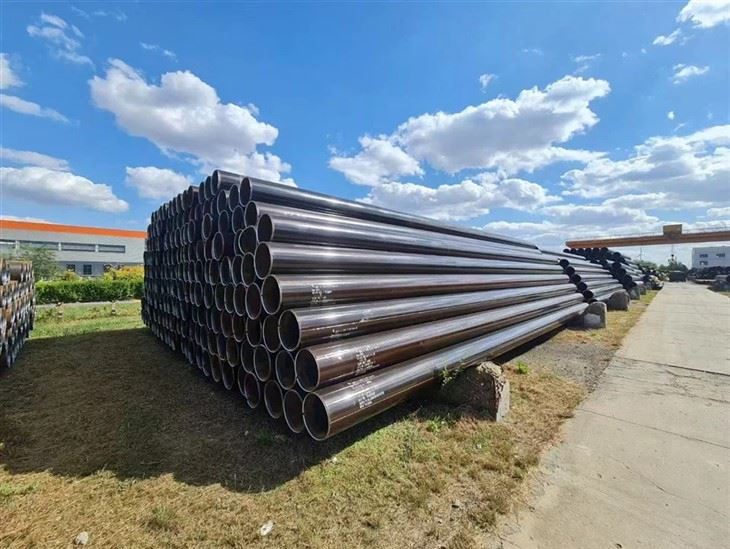
We store the pipes in a dry and well - ventilated area to prevent corrosion. The pipes are stacked on wooden pallets or racks to avoid direct contact with the ground. We also protect the pipes from exposure to harsh environmental conditions such as rain, snow, and extreme temperatures.
Transportation
During transportation, the pipes are carefully loaded and secured to prevent damage. We use appropriate packaging materials such as plastic caps and wrapping to protect the pipe ends and surfaces. For long - distance transportation, we ensure that the pipes are properly cushioned to absorb any shocks and vibrations.
Applications and Related Products
ASTM A252 Grade 3 Pipe has a wide range of applications. It is commonly used in the oil and gas industry for Oil And Gas Transmission LSAW Pipe. In the construction industry, it is used as CE Piling Pipe for building foundations. In offshore engineering, it is an essential material for Jacket Offshore Platform Structure Pipe.
Conclusion
Ensuring the quality of ASTM A252 Grade 3 Pipe requires a comprehensive approach that covers every aspect from raw material selection to storage and transportation. By focusing on these key areas, we can provide our customers with high - quality pipes that meet or exceed the ASTM A252 Grade 3 standards.
If you are interested in purchasing ASTM A252 Grade 3 Pipe or have any questions about our products, please feel free to contact us for a detailed discussion. We are committed to providing you with the best products and services.
References
- ASTM International. ASTM A252/A252M - 20 Standard Specification for Welded and Seamless Steel Pipe Piles.
- ASME Boiler and Pressure Vessel Code.
- Various technical papers on steel pipe manufacturing and quality control.


