As a supplier of 3LPE Coating, I understand the significance of ensuring high - performance coatings for steel pipes. 3LPE Coating, or Three - Layer Polyethylene Coating, is widely used in the pipeline industry for its excellent anti - corrosion properties. In this blog, I will share some effective ways to improve the performance of 3LPE Coating.
1. Substrate Preparation
The first and most crucial step in improving the performance of 3LPE Coating is proper substrate preparation. The surface of the steel pipe must be free from rust, scale, oil, and other contaminants. A clean and rough surface provides better adhesion for the coating layers.
- Surface Cleaning: Mechanical cleaning methods such as shot blasting or sandblasting are commonly used. Shot blasting uses steel shots to remove rust and scale from the pipe surface. The high - velocity impact of the shots not only cleans the surface but also creates a rough profile. Sandblasting, on the other hand, uses sand particles for the same purpose. According to industry standards, the surface cleanliness should reach Sa 2.5 or higher as defined by ISO 8501 - 1. This level of cleanliness ensures that the majority of the rust and scale are removed, leaving a clean and active surface for coating application.
- Surface Profile: After cleaning, the surface profile is an important factor. A proper surface profile provides a larger contact area for the primer layer of the 3LPE Coating to adhere to. The ideal surface roughness for 3LPE Coating application is typically in the range of 40 - 75 microns. A surface that is too smooth may result in poor adhesion, while a surface that is too rough can cause problems such as air entrapment during coating application.
2. Coating Material Selection
The quality of the coating materials used in 3LPE Coating directly affects its performance. There are three main layers in 3LPE Coating: the epoxy primer, the adhesive layer, and the polyethylene topcoat.
- Epoxy Primer: The epoxy primer forms the first layer of the 3LPE Coating system. It provides excellent adhesion to the steel substrate and acts as a barrier against corrosion. When selecting an epoxy primer, factors such as its chemical resistance, curing time, and adhesion strength should be considered. High - quality epoxy primers are formulated to have good wetting properties, which allow them to spread evenly on the steel surface. They should also have a high cross - linking density to ensure long - term corrosion protection. For example, some advanced epoxy primers are designed to resist harsh chemicals and high - temperature environments.
- Adhesive Layer: The adhesive layer plays a crucial role in bonding the epoxy primer and the polyethylene topcoat. It should have good compatibility with both the primer and the topcoat. A well - selected adhesive layer can prevent delamination between the layers, which is a common failure mode in 3LPE Coating. Adhesives with high shear strength and peel strength are preferred. They should also be able to withstand mechanical stresses during pipe installation and operation.
- Polyethylene Topcoat: The polyethylene topcoat provides mechanical protection and additional corrosion resistance. Different grades of polyethylene can be used depending on the specific application requirements. High - density polyethylene (HDPE) is commonly used for its excellent abrasion resistance and chemical stability. The thickness of the polyethylene topcoat also affects the performance of the coating. A thicker topcoat can provide better protection against mechanical damage, but it may also increase the cost. Generally, the thickness of the polyethylene topcoat for 3LPE Coating ranges from 1.8 to 3.7 mm.
3. Coating Application Process
The application process of 3LPE Coating is a critical factor in determining its performance.
- Coating Thickness Control: Maintaining the correct coating thickness is essential. Inconsistent coating thickness can lead to uneven protection and premature failure. During the application process, non - destructive testing methods such as ultrasonic thickness gauges can be used to measure the thickness of each layer. For example, the epoxy primer layer should typically have a thickness of 80 - 120 microns, the adhesive layer around 170 - 250 microns, and the polyethylene topcoat as mentioned above.
- Coating Temperature and Humidity: The temperature and humidity during coating application can significantly affect the quality of the coating. The epoxy primer, for instance, has a specific curing temperature range. If the temperature is too low, the curing process may be slow or incomplete, resulting in poor adhesion and reduced corrosion resistance. High humidity can also cause problems such as blistering on the coating surface. It is recommended to apply 3LPE Coating within a temperature range of 5 - 40°C and a relative humidity below 85%.
- Application Speed and Uniformity: The speed at which the coating is applied should be controlled to ensure uniformity. A consistent application speed helps to avoid thin or thick spots in the coating. Automated coating equipment is often used to ensure precise and uniform application. For example, extrusion coating machines can be used to apply the polyethylene topcoat evenly around the circumference of the pipe.
4. Quality Control and Testing
To ensure the performance of 3LPE Coating, strict quality control and testing procedures should be implemented.
- In - process Inspection: During the coating process, in - process inspections are necessary to detect any potential problems early. Visual inspections can be used to check for defects such as bubbles, cracks, or uneven coating thickness. Non - destructive testing methods can also be used to verify the integrity of the coating layers. For example, holiday detection is a common test used to identify any pinholes or holidays in the coating. A high - voltage holiday detector is used to pass an electrical current through the coating. If there is a pinhole, the current will flow through it, indicating a defect.
- Post - coating Testing: After the coating is applied and cured, various tests can be conducted to evaluate its performance. Adhesion tests, such as the pull - off test, can be used to measure the bonding strength between the coating layers and the steel substrate. Impact tests can be used to assess the coating's ability to withstand mechanical impacts. For example, a falling weight impact test can be performed to simulate the impact that the pipe may experience during transportation or installation.
5. Comparison with Other Coating Systems
It is also beneficial to understand how 3LPE Coating compares with other coating systems such as Hot Dip Spun Galvanized and 2LPP Coating.
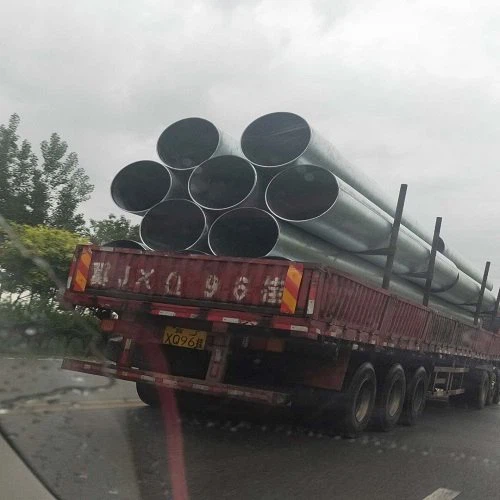

- Hot Dip Spun Galvanized: Hot dip spun galvanized coatings provide corrosion protection through the sacrificial anode effect of zinc. While they are effective in many environments, they may not be suitable for applications where high - temperature or chemical resistance is required. 3LPE Coating, on the other hand, can offer better protection in such harsh conditions due to the combination of different layers.
- 2LPP Coating: 2LPP Coating consists of a primer and a polypropylene topcoat. It is a cost - effective alternative in some cases. However, 3LPE Coating generally has better adhesion and corrosion resistance due to the presence of the adhesive layer, which helps to bond the primer and the topcoat more effectively.
Conclusion
Improving the performance of 3LPE Coating requires attention to every aspect, from substrate preparation to coating application and quality control. By following the best practices outlined in this blog, we can ensure that the 3LPE Coating provides long - term corrosion protection and mechanical durability for steel pipes. If you are interested in high - performance 3LPE Coating for your pipeline projects, we are here to provide you with the best solutions. Feel free to contact us for more information and to start a procurement negotiation.
References
- ISO 8501 - 1:2007, "Preparation of steel substrates before application of paints and related products - Visual assessment of surface cleanliness - Part 1: Rust grades and preparation grades of uncoated steel substrates and of steel substrates after overall removal of previous coatings"
- Industry standards and guidelines for 3LPE Coating application provided by relevant professional organizations.
- Technical literature from coating material manufacturers regarding the properties and application of epoxy primers, adhesives, and polyethylene topcoats.