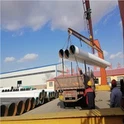
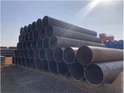
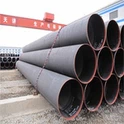
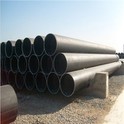
Optimizing the design of Euro Underground Piles is a crucial task that directly impacts the safety, durability, and cost - effectiveness of construction projects. As a Euro Underground Pile supplier, I have witnessed firsthand the significance of a well - designed pile. In this blog, I will share some key strategies and considerations for optimizing the design of Euro Underground Piles.
Understanding the Geotechnical Conditions
The first step in optimizing the design of Euro Underground Piles is to thoroughly understand the geotechnical conditions at the construction site. The soil type, its density, moisture content, and the presence of any geological anomalies can greatly affect the performance of the piles. For instance, in soft clay soils, friction piles may be more suitable as they rely on the frictional resistance between the pile and the surrounding soil to support the load. On the other hand, in dense sand or rock, end - bearing piles that transfer the load to a hard stratum at the base of the pile may be a better choice.
Geotechnical investigations, including soil sampling and laboratory testing, should be carried out to obtain accurate data about the soil properties. This data can then be used in pile design software to model the behavior of the piles under different loading conditions. By having a clear understanding of the geotechnical conditions, we can select the appropriate pile type, length, and diameter, which will ultimately lead to a more efficient and cost - effective design.
Selecting the Right Pile Material
The choice of pile material is another important factor in optimizing the design of Euro Underground Piles. The most common materials used for underground piles are concrete, steel, and timber. Each material has its own advantages and disadvantages, and the selection should be based on the specific requirements of the project.
Concrete piles are known for their high compressive strength and durability. They can be pre - cast or cast - in - place. Pre - cast concrete piles are manufactured in a factory under controlled conditions, which ensures high quality and consistency. They can be easily transported to the construction site and installed quickly. Cast - in - place concrete piles, on the other hand, are formed directly in the ground. They can be customized to fit the specific site conditions and can be used in situations where access to the site is limited.
Steel piles offer high strength - to - weight ratio and good flexibility. They can be driven into the ground using pile driving equipment, which is relatively fast and efficient. Steel piles are also suitable for use in marine environments where corrosion resistance is required. However, they are more expensive than concrete piles and may require additional corrosion protection measures.
Timber piles are a traditional choice for some construction projects. They are relatively inexpensive and easy to install. However, they have limited strength and durability compared to concrete and steel piles, and they are susceptible to decay and insect damage. Therefore, timber piles are usually used in shallow foundations or in situations where the environmental conditions are favorable.
As a supplier, we offer a wide range of pile materials to meet the diverse needs of our customers. Whether it is a Bridge Building Structure Pipe and Pile for a large - scale bridge project or a Port Building Pile for a port construction, we can provide the appropriate pile material and design advice.
Considering the Load Requirements
The load requirements of the structure that the piles will support are a critical factor in pile design. The loads can be divided into vertical loads, horizontal loads, and moment loads. Vertical loads are the most common type of load and are caused by the weight of the structure itself, as well as any live loads such as people, equipment, and vehicles. Horizontal loads can be due to wind, earthquakes, or soil pressure. Moment loads are caused by the eccentricity of the vertical loads or by the action of horizontal loads.
In order to optimize the design of Euro Underground Piles, the pile capacity should be calculated accurately to ensure that it can safely carry the expected loads. The pile capacity can be determined using theoretical methods, empirical formulas, or field tests. It is important to consider both the ultimate capacity of the piles, which is the maximum load that the piles can carry before failure, and the serviceability capacity, which is the load that the piles can carry under normal working conditions without excessive settlement or deformation.


By accurately calculating the load requirements and designing the piles accordingly, we can avoid over - designing or under - designing the piles. Over - designing can lead to unnecessary costs, while under - designing can pose a safety risk to the structure.
Optimizing the Pile Layout
The layout of the piles in the foundation is also an important aspect of pile design. The pile spacing, arrangement, and number of piles can have a significant impact on the performance of the foundation. The pile spacing should be sufficient to prevent the interference between adjacent piles, which can reduce the pile capacity. At the same time, the piles should be arranged in a way that distributes the loads evenly across the foundation.
In general, a square or rectangular grid pattern is commonly used for pile layout. However, in some cases, a triangular or hexagonal pattern may be more suitable, especially for structures with irregular shapes or non - uniform loads. The number of piles required can be determined based on the load requirements and the pile capacity. By optimizing the pile layout, we can improve the overall stability and performance of the foundation.
Incorporating Advanced Design Techniques
With the development of technology, advanced design techniques are being increasingly used in pile design. These techniques can provide more accurate and detailed information about the behavior of the piles, which can help in optimizing the design.
Finite element analysis (FEA) is one such technique. FEA can be used to model the interaction between the piles, the soil, and the structure. It can take into account the non - linear behavior of the soil, the pile - soil interface, and the deformation of the structure. By using FEA, we can predict the settlement, stress distribution, and failure modes of the piles more accurately, which can lead to a more optimized design.
Another advanced technique is the use of instrumented piles. Instrumented piles are equipped with sensors that can measure the load, strain, and displacement of the piles during installation and service. The data collected from the sensors can be used to validate the design assumptions and to monitor the performance of the piles over time. This can help in detecting any potential problems early and taking appropriate measures to ensure the safety and durability of the structure.
Quality Control and Monitoring
Once the Euro Underground Piles are designed and installed, quality control and monitoring are essential to ensure that the piles perform as expected. Quality control measures should be implemented during the manufacturing and installation process to ensure that the piles meet the required standards. This includes checking the dimensions, strength, and integrity of the piles.
Monitoring the performance of the piles during service is also important. This can be done using various methods such as settlement monitoring, inclinometer measurements, and load testing. By monitoring the piles, we can detect any changes in their behavior, such as excessive settlement or tilting, and take corrective actions if necessary.
As a Euro Underground Pile supplier, we are committed to providing high - quality products and services. We have a strict quality control system in place to ensure that our piles meet the highest standards. We also offer after - sales support and monitoring services to our customers to ensure the long - term performance of the piles.
Conclusion
Optimizing the design of Euro Underground Piles is a complex but rewarding process. By understanding the geotechnical conditions, selecting the right pile material, considering the load requirements, optimizing the pile layout, incorporating advanced design techniques, and implementing quality control and monitoring measures, we can design piles that are safe, durable, and cost - effective.
If you are involved in a construction project that requires Euro Underground Piles, we would be glad to assist you. Our team of experts can provide you with professional design advice and high - quality pile products. Whether it is a Jacket Offshore Platform Structure Pipe for an offshore project or a pile for a building foundation on land, we have the experience and resources to meet your needs. Contact us today to discuss your project requirements and start the procurement process.
References
- Tomlinson, M. J. (2001). Pile Design and Construction Practice. Spon Press.
- Coduto, D. P., Kitch, R. M., & Stuedlein, A. (2011). Foundation Design: Principles and Practices. Pearson Prentice Hall.
- Brown, D. A. (2006). Geotechnical Engineering for Driven Piles. CRC Press.