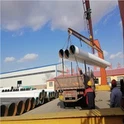
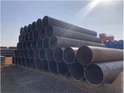
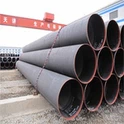
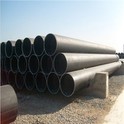
Hey there! I'm a supplier of ASTM A672 Steel Pipe, and I've been in this industry for quite some time. Today, I'm gonna share with you how to weld ASTM A672 steel pipe. It's a topic that's super important, especially if you're working with ASTM A672 Steel Pipe.
First off, let's understand what ASTM A672 steel pipe is. ASTM A672 is a standard specification for electric-fusion-welded steel pipe for atmospheric and lower-temperature service. This type of pipe is commonly used in applications where the temperature can get pretty low, and it needs to maintain its strength and integrity. You can find more info about it on this Steel Pipe for Atmospheric and Lower Temperatures page.
Preparing for Welding
Before you start welding, there are a few key steps you need to take. The first thing is to clean the pipe. Any dirt, rust, or grease on the surface of the pipe can really mess up the welding process. You can use a wire brush or a grinder to clean the area where you'll be welding. Make sure you get rid of all the contaminants, so the weld will bond properly.
Next, you need to check the fit-up of the pipes. The ends of the pipes should be aligned correctly and have the right gap between them. If the gap is too wide, the weld might not be strong enough. If it's too narrow, it can cause problems with the penetration of the weld. You can use clamps to hold the pipes in place while you're checking the fit-up.
Another important thing is to preheat the pipe. Preheating helps to reduce the cooling rate of the weld, which can prevent cracking. The preheat temperature depends on the thickness of the pipe and the type of welding process you're using. Usually, for ASTM A672 steel pipe, you'll want to preheat it to around 100 - 200°F (38 - 93°C). You can use a torch or an induction heater to preheat the pipe.
Choosing the Right Welding Process
There are several welding processes you can use to weld ASTM A672 steel pipe. The most common ones are Shielded Metal Arc Welding (SMAW), Gas Metal Arc Welding (GMAW), and Flux-Cored Arc Welding (FCAW).
Shielded Metal Arc Welding (SMAW)
SMAW is a popular choice for welding ASTM A672 steel pipe, especially in field applications. It's a relatively simple process that uses a consumable electrode coated in flux. The flux creates a shield around the weld pool, protecting it from contaminants in the air. SMAW is good for welding in all positions, and it can handle a wide range of thicknesses. However, it's a bit slower than some other processes, and you need to change the electrodes frequently.


Gas Metal Arc Welding (GMAW)
GMAW is a faster welding process that uses a continuous wire electrode and a shielding gas. The shielding gas protects the weld pool from oxidation and other contaminants. GMAW is great for welding thin to medium-thickness pipes, and it produces a clean and smooth weld. However, it's more sensitive to wind and requires a stable power source.
Flux-Cored Arc Welding (FCAW)
FCAW is similar to GMAW, but it uses a tubular wire electrode filled with flux. The flux provides the shielding gas, so you don't always need an external shielding gas. FCAW is a versatile process that can be used in all positions and is good for welding thicker pipes. It's also more forgiving in outdoor conditions compared to GMAW.
Selecting the Right Welding Consumables
The choice of welding consumables is crucial for a successful weld. For ASTM A672 steel pipe, you'll want to use consumables that are compatible with the base metal.
If you're using SMAW, you'll need to choose the right electrode. Electrodes like E7018 are commonly used for welding ASTM A672 steel. They provide good strength and ductility in the weld.
For GMAW and FCAW, you'll need to select the appropriate wire. ER70S-6 is a popular wire for GMAW when welding ASTM A672 steel. It has good weldability and produces a strong weld. When using FCAW, you can choose a wire like E71T-1, which is suitable for all-position welding.
Welding Techniques
Once you've prepared the pipes, chosen the right welding process, and selected the welding consumables, it's time to start welding. Here are some general welding techniques to keep in mind:
- Travel Speed: The travel speed is how fast you move the welding torch or electrode along the joint. If you go too fast, the weld might not penetrate properly. If you go too slow, you can overheat the metal and cause distortion. You need to find the right balance based on the thickness of the pipe and the welding process.
- Angle of the Torch or Electrode: The angle of the torch or electrode affects the shape and quality of the weld. For most welding processes, you'll want to hold the torch or electrode at an angle of around 10 - 15 degrees from the vertical. This helps to direct the heat and the filler metal into the joint.
- Weaving: Weaving is a technique where you move the torch or electrode from side to side while welding. It helps to spread the filler metal evenly across the joint and can improve the appearance of the weld. However, you need to be careful not to weave too much, as it can cause the weld to be uneven.
Post-Weld Treatment
After you've finished welding, there are a few post-weld treatments you should consider. One of the most important is post-weld heat treatment (PWHT). PWHT helps to relieve the residual stresses in the weld and can improve the toughness and ductility of the weld. The PWHT temperature and time depend on the thickness of the pipe and the type of welding process. Usually, for ASTM A672 steel pipe, you'll want to heat the weld to around 1100 - 1200°F (593 - 649°C) and hold it at that temperature for a certain period of time.
You also need to inspect the weld. You can use visual inspection to check for any obvious defects like cracks, porosity, or lack of fusion. You can also use non-destructive testing methods like ultrasonic testing or radiographic testing to check for internal defects.
Quality Control
Quality control is essential when welding ASTM A672 steel pipe. You need to make sure that the weld meets the required standards. This includes checking the dimensions of the weld, the strength of the weld, and the quality of the weld surface. You can use a variety of tools and techniques to perform quality control, such as calipers, hardness testers, and visual inspection.
Common Problems and Solutions
When welding ASTM A672 steel pipe, you might encounter some common problems. Here are a few of them and how to solve them:
- Cracking: Cracking can occur due to several reasons, such as improper preheating, high cooling rates, or excessive stresses in the weld. To prevent cracking, make sure you preheat the pipe properly, use the right welding parameters, and perform post-weld heat treatment.
- Porosity: Porosity is the presence of small holes in the weld. It can be caused by contaminants on the surface of the pipe, improper shielding gas, or incorrect welding parameters. To prevent porosity, clean the pipe thoroughly, use the right shielding gas, and adjust the welding parameters as needed.
- Lack of Fusion: Lack of fusion occurs when the filler metal doesn't bond properly to the base metal. It can be caused by improper welding techniques, incorrect travel speed, or insufficient heat input. To prevent lack of fusion, make sure you use the right welding techniques, adjust the travel speed, and increase the heat input if necessary.
Conclusion
Welding ASTM A672 steel pipe requires careful preparation, the right welding process, and proper post-weld treatment. By following the steps and techniques outlined in this blog, you can ensure that your welds are strong, reliable, and meet the required standards.
If you're in the market for ASTM A672 Steel Pipe or need more information about welding it, don't hesitate to reach out. We're here to help you with all your steel pipe needs and can provide you with high-quality products and expert advice. Whether you're working on a small project or a large industrial application, we've got you covered. So, if you're interested, feel free to contact us for a quote or to discuss your requirements.
References
- ASTM International. ASTM A672 Standard Specification for Electric-Fusion-Welded Steel Pipe for Atmospheric and Lower-Temperature Service.
- Welding Handbook, American Welding Society.
- Various industry publications and technical resources on steel pipe welding.