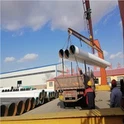
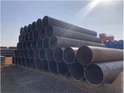
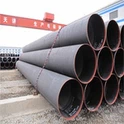
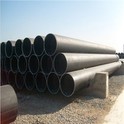
As a supplier of API 5L LSAW Steel Pipe, I've encountered numerous inquiries regarding the differences between single - sided and double - sided welding of these pipes. In this blog, I aim to provide a comprehensive understanding of these two welding techniques and their implications for API 5L LSAW Steel Pipe.
Introduction to API 5L LSAW Steel Pipe
API 5L LSAW Steel Pipe, as defined by the American Petroleum Institute (API), is widely used in the oil and gas industry. These pipes are longitudinally submerged arc welded (LSAW), which means the weld seam runs along the length of the pipe. The API 5L LSAW Steel Pipe is known for its high strength, excellent corrosion resistance, and ability to withstand high pressure, making it suitable for transporting oil, gas, and other fluids over long distances.
Single - Sided Welding of API 5L LSAW Steel Pipe
Single - sided welding is a welding technique where the weld is made from one side of the pipe joint. This method is relatively straightforward and cost - effective, especially for pipes with smaller diameters or thinner walls.
Process
In single - sided welding, the pipe edges are prepared, usually by beveling, to create a suitable groove for the weld. The welding electrode is then used to deposit filler metal into the groove from one side. The heat generated by the welding process melts the base metal and the filler metal, forming a weld bead.


Advantages
- Cost - Efficiency: Single - sided welding requires less equipment and labor compared to double - sided welding. Since only one side needs to be welded, the welding time is reduced, which in turn lowers the production cost.
- Simplicity: The process is relatively simple and easy to control, especially for less complex pipe geometries. This makes it a popular choice for small - scale production or when quick turnaround times are required.
Disadvantages
- Weld Quality: Single - sided welds may have lower quality compared to double - sided welds. There is a higher risk of incomplete fusion, porosity, and other welding defects, especially in thicker pipes. These defects can compromise the strength and integrity of the pipe, increasing the likelihood of leaks or failures.
- Limited Thickness: This method is generally limited to pipes with thinner walls. As the wall thickness increases, it becomes more difficult to achieve a full - penetration weld from one side, which can lead to weaker joints.
Double - Sided Welding of API 5L LSAW Steel Pipe
Double - sided welding involves welding the pipe joint from both sides. This technique is commonly used for larger - diameter and thicker - walled pipes, where a higher level of weld quality is required.
Process
Similar to single - sided welding, the pipe edges are prepared by beveling. The first side is welded using a suitable welding process, such as submerged arc welding (SAW). After the first side is welded, the pipe is flipped, and the second side is welded. This ensures that the entire joint is fully penetrated and provides a stronger and more reliable weld.
Advantages
- High Weld Quality: Double - sided welding provides better fusion and a more uniform weld structure. The risk of welding defects is significantly reduced, resulting in a stronger and more durable pipe joint. This makes it suitable for applications where high pressure and long - term reliability are critical, such as in Carbon Steel API Sour Service Line Pipe used in sour gas environments.
- Full Penetration: This method can achieve full - penetration welds in thicker pipes, ensuring that the entire cross - section of the joint is welded. This provides better resistance to internal and external pressure, reducing the risk of leaks and failures.
Disadvantages
- Higher Cost: Double - sided welding requires more equipment, labor, and time compared to single - sided welding. The need to flip the pipe and weld both sides increases the production cost, which may not be feasible for all applications.
- Complexity: The process is more complex and requires more skilled operators. The alignment and fit - up of the pipe joint need to be more precise to ensure a proper weld on both sides.
Comparison between Single - Sided and Double - Sided Welding
Weld Strength
Double - sided welds generally have higher strength compared to single - sided welds. The full - penetration nature of double - sided welds provides a more continuous and uniform weld structure, which can better withstand high pressure and external forces. In contrast, single - sided welds may have weaker areas due to incomplete fusion or other defects, reducing their overall strength.
Weld Quality and Integrity
Double - sided welding offers better weld quality and integrity. The ability to weld from both sides reduces the risk of porosity, incomplete fusion, and other defects. This results in a more reliable pipe joint that is less likely to fail under harsh operating conditions. Single - sided welds, on the other hand, may require additional inspection and testing to ensure their quality.
Cost
Single - sided welding is more cost - effective in terms of equipment, labor, and production time. However, if the application requires high - quality welds and long - term reliability, the cost of potential repairs or replacements due to single - sided weld failures may outweigh the initial cost savings. Double - sided welding, although more expensive upfront, can provide long - term cost savings by reducing the risk of pipe failures.
Application Suitability
Single - sided welding is suitable for pipes with smaller diameters or thinner walls, as well as applications where cost is a major concern and the operating conditions are less demanding. For example, it can be used in Gas Pipe Plumbing systems where the pressure is relatively low. Double - sided welding, on the other hand, is preferred for larger - diameter and thicker - walled pipes, as well as applications where high pressure, high temperature, and corrosive environments are involved, such as in offshore oil and gas pipelines.
Conclusion
In conclusion, the choice between single - sided and double - sided welding of API 5L LSAW Steel Pipe depends on various factors, including pipe diameter, wall thickness, application requirements, and cost considerations. Single - sided welding offers cost - efficiency and simplicity, but may have lower weld quality, especially for thicker pipes. Double - sided welding provides higher weld quality and strength, but is more expensive and complex.
As a supplier of API 5L LSAW Steel Pipe, we understand the importance of choosing the right welding technique for your specific needs. Whether you require single - sided or double - sided welded pipes, we can provide high - quality products that meet your specifications. If you are interested in purchasing API 5L LSAW Steel Pipe or have any questions about our products, please feel free to contact us for a detailed discussion and a competitive quote.
References
- API Specification 5L, “Specification for Line Pipe,” American Petroleum Institute.
- Welding Handbook, Volume 2: Welding Processes, American Welding Society.