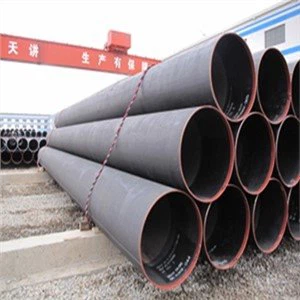
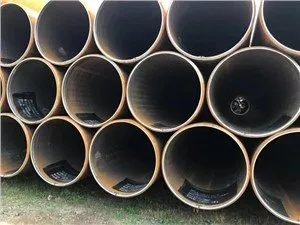
Carbon steel structural pipes are indispensable in modern industry, and their durability and versatility have led to their widespread application across numerous sectors. Carbon steel structural pipes possess superior performance, far exceeding many other alternative materials. Composed of an iron-carbon alloy, their high tensile strength is a key characteristic, enabling them to withstand heavy loads, extreme pressures, and mechanical stresses. This ensures structural stability even in harsh environments. Beyond strength, the excellent plasticity of carbon steel structural pipes allows for customization into various complex shapes without compromising structural integrity.
Weldability is another advantage of carbon steel structural pipes, simplifying subsequent installation and on-site modifications. They can be welded using standard processes, shortening construction time and reducing labor costs. In process piping systems and thermal infrastructure, their excellent thermal conductivity makes them a primary choice for heat transfer applications. The long service life and low maintenance requirements of carbon steel structural pipes significantly reduce overall costs.
The adaptability of carbon steel structural pipes is a primary consideration for many industries when making their selection. In construction projects, including high-rise buildings, long-span bridges, and prefabricated buildings, carbon steel structural pipes can be used as load-bearing frames, support systems, and structural anchors, balancing strength and weight while maximizing design flexibility. Prefabricated and modular construction enables rapid assembly, reducing on-site waste.
Carbon steel structural pipes play a crucial role in oil and gas transportation, power generation, and renewable energy projects. Long-distance oil and gas pipelines rely on high-strength carbon steel pipes to withstand extreme pressures and harsh terrain, and demand is growing at an ever-increasing rate as global energy security initiatives expand pipeline networks. In the renewable energy sector, these steel pipes form the structural framework of wind turbine towers and solar panel supports, enduring years of outdoor environmental testing due to their durability.
Urban engineering and projects heavily rely on carbon steel structural pipes, such as infrastructure construction including urban underground utility corridors, water treatment plants, and transportation networks, continuously creating stable demand. These projects require pipes capable of withstanding underground pressure, chemical corrosion, and long-term use, making carbon steel the material of choice for municipal engineers and project developers worldwide.
Selecting the optimal carbon steel structural pipe requires balancing application requirements, performance specifications, and cost factors. First, the operating environment must be clearly defined-considering pressure, temperature, and corrosion exposure-to determine the appropriate material grade and protective coating. For high-pressure applications such as energy pipelines, high-strength steel pipes should be selected; while corrosive environments may require epoxy-coated or galvanized steel pipes. The manufacturing process is another key factor: seamless steel pipes offer superior strength and uniformity in high-pressure applications compared to conventional steel pipes.
Hot Tags: crbon steel structural pipe, China, suppliers, manufacturers, factory, wholesale, cheap, discount, alloy steel lsaw steel pipe, astm a252 grade 2, en 10217 lsaw steel pipe, Euro Underground Pile, heavy duty lsaw steel pipe, Undergroud Pile