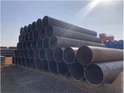
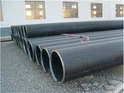
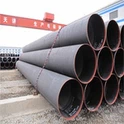
Hey there! As a supplier of ASTM A672 Steel Pipe, I'm stoked to share with you the ins and outs of its manufacturing process. It's a pretty fascinating journey from raw materials to the final product that's used in so many industries.
Raw Material Selection
The first step in making ASTM A672 steel pipe is picking the right raw materials. We usually start with high - quality steel billets. These billets are made from a specific composition of iron, carbon, and other alloying elements. The chemical composition is super important because it determines the pipe's strength, durability, and resistance to corrosion.
For ASTM A672 steel pipes, we need to make sure the carbon content is just right. Too much carbon and the pipe can become brittle; too little, and it won't have the necessary strength. Other alloying elements like manganese, silicon, and sulfur are also carefully controlled. We source our billets from reliable suppliers who can provide us with the exact specifications we need.
Heating the Billets
Once we have the billets, it's time to heat them up. We use a high - temperature furnace to heat the billets to a specific temperature, usually around 1200 - 1300 degrees Celsius. This makes the steel soft and malleable, which is crucial for the next steps of the manufacturing process.
Heating the billets evenly is key. If the temperature is not consistent, it can lead to uneven expansion and contraction, which can cause defects in the final pipe. We use advanced temperature control systems to make sure the heating process is as precise as possible.
Piercing
After the billets are heated, they are ready for piercing. Piercing is the process of creating a hole in the center of the billet to form a hollow tube. We use a piercing mill for this. The billet is fed into the mill, and a mandrel is pushed through the center to create the hole.
This step requires a lot of force and precision. The mandrel needs to be the right size and shape to ensure a smooth and uniform hole. The speed at which the billet is fed into the mill also affects the quality of the piercing. If it's too fast, the hole might not be straight; if it's too slow, it can cause excessive wear on the equipment.
Rolling
Once the billet has been pierced, it's time for rolling. Rolling is used to reduce the wall thickness and increase the length of the pipe. We use a series of rolling mills to gradually shape the pipe.
There are different types of rolling mills, such as the continuous rolling mill and the pilger mill. The continuous rolling mill is more efficient and can produce pipes in large quantities. The pilger mill, on the other hand, is better for producing pipes with high precision and a smooth surface finish.
During the rolling process, the pipe is constantly monitored for its dimensions and quality. Any deviations from the specifications are corrected immediately to ensure that the final product meets the ASTM A672 standards.
Welding (if applicable)
Some ASTM A672 steel pipes are welded. There are different welding methods, such as Electric Fusion Welded (EFW). EFW is a popular method for producing pipes that can withstand high pressure. You can learn more about EFW Pipes for High Pressure.


In the EFW process, the edges of the steel strip are heated and fused together using an electric current. This creates a strong and reliable weld. The welding process is carefully controlled to ensure that the weld is free of defects and has the right strength.
Heat Treatment
After the rolling and welding (if any), the pipe goes through a heat treatment process. Heat treatment is used to improve the mechanical properties of the pipe, such as its strength and toughness.
There are different types of heat treatment, such as annealing, normalizing, and quenching. Annealing involves heating the pipe to a specific temperature and then slowly cooling it. This helps to relieve internal stresses and improve the ductility of the pipe. Normalizing is similar to annealing, but the cooling process is faster. Quenching involves rapid cooling, which can increase the hardness of the pipe.
Finishing
Once the heat treatment is done, the pipe is ready for finishing. This includes processes like cutting the pipe to the desired length, beveling the ends, and applying a protective coating.
Cutting the pipe to the right length is important to meet the customer's requirements. We use high - precision cutting equipment to ensure accurate cuts. Beveling the ends of the pipe makes it easier to connect the pipes together during installation.
Applying a protective coating is crucial to prevent corrosion. There are different types of coatings, such as epoxy coatings and zinc coatings. The coating not only protects the pipe from rust but also extends its service life.
Quality Control
Throughout the entire manufacturing process, quality control is of utmost importance. We have a team of quality control experts who use a variety of testing methods to ensure that the ASTM A672 steel pipes meet the required standards.
Some of the testing methods include non - destructive testing (NDT), such as ultrasonic testing and magnetic particle testing. These methods are used to detect any internal or surface defects in the pipe. We also perform mechanical testing, such as tensile testing and hardness testing, to ensure that the pipe has the right strength and hardness.
Comparison with ASTM A671 Steel Pipe
You might be wondering how ASTM A672 steel pipe compares to ASTM A671 Steel Pipe. Well, both are used in high - pressure applications, but there are some differences. ASTM A671 is more suitable for low - temperature service, while ASTM A672 is better for higher - temperature applications. The manufacturing processes for both are similar, but the chemical compositions and heat treatment methods might vary slightly.
Why Choose Our ASTM A672 Steel Pipe
As a supplier of ASTM A672 Steel Pipe, we take pride in providing high - quality products. We have strict quality control measures in place to ensure that every pipe we produce meets the ASTM A672 standards. Our pipes are used in a wide range of industries, including oil and gas, power generation, and construction.
If you're in the market for ASTM A672 steel pipe, we'd love to talk to you. Whether you need a small quantity for a specific project or a large order for a long - term supply, we can meet your needs. Contact us to discuss your requirements and get a quote. We're here to help you find the right solution for your project.
References
- American Society for Testing and Materials (ASTM) standards for A672 steel pipe.
- Industry research on steel pipe manufacturing processes.