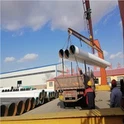
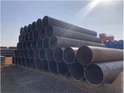
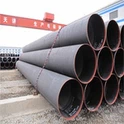
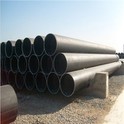
As a supplier of API 5L LSAW Steel Pipe, I often encounter various inquiries from clients, ranging from basic product specifications to more technical details. One question that has recently come up quite frequently is about the thermal conductivity of API 5L LSAW Steel Pipe. In this blog post, I will delve into this topic, explaining what thermal conductivity is, how it relates to API 5L LSAW Steel Pipe, and why it matters in different applications.
Understanding Thermal Conductivity
Thermal conductivity is a fundamental property of materials that describes their ability to conduct heat. It is defined as the quantity of heat that passes through a unit area of a material in a unit time under a unit temperature gradient. In simpler terms, it measures how easily heat can flow through a material. The SI unit for thermal conductivity is watts per meter-kelvin (W/(m·K)).
The thermal conductivity of a material depends on several factors, including its chemical composition, crystal structure, and temperature. For metals like steel, thermal conductivity is generally high compared to non-metals because metals have a large number of free electrons that can carry heat energy.
Thermal Conductivity of API 5L LSAW Steel Pipe
API 5L LSAW (Longitudinal Submerged Arc Welded) Steel Pipe is a type of steel pipe commonly used in the oil and gas industry for transporting various fluids, including crude oil, natural gas, and refined products. The thermal conductivity of API 5L LSAW Steel Pipe is primarily determined by its chemical composition, which is mainly iron with small amounts of carbon and other alloying elements.
The typical thermal conductivity of carbon steel, which is the base material for API 5L LSAW Steel Pipe, ranges from about 40 to 60 W/(m·K) at room temperature. However, this value can vary depending on the specific grade of API 5L steel, as different grades may have different alloying elements and heat treatment processes.
For example, API 5L X42 grade steel, which has a relatively low yield strength, may have a thermal conductivity closer to the lower end of the range, while higher-grade steels like API 5L X80 may have a slightly higher thermal conductivity due to their different alloying compositions.
Factors Affecting the Thermal Conductivity of API 5L LSAW Steel Pipe
Chemical Composition
As mentioned earlier, the chemical composition of API 5L LSAW Steel Pipe plays a significant role in determining its thermal conductivity. Alloying elements such as manganese, silicon, and chromium can affect the movement of free electrons in the steel, thereby influencing its ability to conduct heat. For instance, adding small amounts of chromium can improve the corrosion resistance of the steel but may also slightly reduce its thermal conductivity.
Temperature
The thermal conductivity of API 5L LSAW Steel Pipe is also temperature-dependent. Generally, as the temperature increases, the thermal conductivity of steel decreases. This is because at higher temperatures, the lattice vibrations in the steel become more intense, which scatters the free electrons and reduces their ability to carry heat.
Microstructure
The microstructure of the steel, which is influenced by factors such as heat treatment and manufacturing processes, can also affect its thermal conductivity. For example, a fine-grained microstructure may have a slightly higher thermal conductivity than a coarse-grained microstructure because the grain boundaries in a fine-grained steel provide less resistance to the flow of heat.
Importance of Thermal Conductivity in API 5L LSAW Steel Pipe Applications
Oil and Gas Transportation
In the oil and gas industry, API 5L LSAW Steel Pipe is used to transport fluids over long distances. The thermal conductivity of the pipe is important because it affects the heat transfer between the fluid inside the pipe and the surrounding environment. For example, in cold climates, the high thermal conductivity of the steel pipe can cause the fluid inside to lose heat rapidly, which may lead to issues such as wax deposition and increased viscosity. On the other hand, in hot climates, the pipe may absorb heat from the environment, which can also affect the properties of the fluid.
Heat Exchangers
API 5L LSAW Steel Pipe can also be used in heat exchangers, where it is necessary to transfer heat efficiently between two fluids. In this application, the high thermal conductivity of the steel pipe is an advantage as it allows for rapid heat transfer, improving the overall efficiency of the heat exchanger.
Power Generation
In power generation plants, API 5L LSAW Steel Pipe may be used to transport steam or other hot fluids. The thermal conductivity of the pipe is crucial in ensuring that the heat is transferred effectively and that the system operates at optimal efficiency.
Comparing API 5L LSAW Steel Pipe with Other Materials
When considering the thermal conductivity of API 5L LSAW Steel Pipe, it is also useful to compare it with other materials commonly used in similar applications. For example, compared to plastic pipes, steel pipes have a much higher thermal conductivity. This means that steel pipes can transfer heat more efficiently but may also require more insulation in applications where heat loss needs to be minimized.
On the other hand, compared to copper pipes, which have an even higher thermal conductivity, steel pipes are generally more cost-effective and have better mechanical properties, making them a more suitable choice for many oil and gas applications.
Conclusion
In conclusion, the thermal conductivity of API 5L LSAW Steel Pipe is an important property that affects its performance in various applications. Understanding the factors that influence thermal conductivity, such as chemical composition, temperature, and microstructure, can help in selecting the right grade of steel pipe for specific applications.
As a supplier of API 5L LSAW Steel Pipe, we are committed to providing high-quality products that meet the specific requirements of our clients. Whether you need Oil Line Pipe for oil transportation or Carbon Steel API Sour Service Line Pipe for sour gas applications, we have the expertise and resources to assist you.
If you have any questions or would like to discuss your specific needs, please feel free to contact us. We look forward to the opportunity to work with you and provide you with the best solutions for your projects.


References
- Incropera, F. P., & DeWitt, D. P. (2002). Fundamentals of Heat and Mass Transfer. Wiley.
- ASM Handbook, Volume 1: Properties and Selection: Irons, Steels, and High-Performance Alloys. ASM International.
- API Specification 5L: Specification for Line Pipe. American Petroleum Institute.