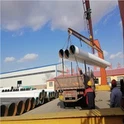
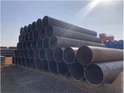
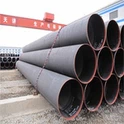
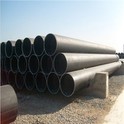
Hey there! I'm a supplier of API 5L LSAW Steel Pipe, and today I wanna chat about ultrasonic testing of these pipes.
First off, let's understand what API 5L LSAW Steel Pipe is. API 5L is a specification set by the American Petroleum Institute for line pipes used in the oil and gas industry. LSAW stands for Longitudinal Submerged Arc Welded. These pipes are made by bending a steel plate and then welding the seam longitudinally using the submerged arc welding process. They're super important in the oil and gas sector for transporting fluids like crude oil, natural gas, and refined products. You can check out more about Oil Line Pipe on our website.
Now, onto ultrasonic testing. Ultrasonic testing, or UT for short, is a non - destructive testing (NDT) method. It's used to detect internal and surface flaws in the API 5L LSAW Steel Pipe. The basic principle behind UT is the use of high - frequency sound waves, usually above 20 kHz, which are inaudible to the human ear.
How does it work? Well, a transducer is used to generate these ultrasonic waves. The transducer is a device that can convert electrical energy into mechanical energy (ultrasonic waves) and vice versa. When the ultrasonic waves are sent into the steel pipe, they travel through the material. If there's a flaw like a crack, porosity, or an inclusion in the pipe, part of the ultrasonic waves will be reflected back from the flaw. The reflected waves are then detected by the same or another transducer and converted back into electrical signals. These signals are analyzed on a screen, and based on the time it takes for the waves to return and the amplitude of the signals, the size, location, and type of the flaw can be determined.
There are a few different types of ultrasonic testing techniques used for API 5L LSAW Steel Pipe. One common method is pulse - echo testing. In this method, the same transducer sends and receives the ultrasonic waves. It's great for detecting flaws that are perpendicular to the direction of the wave propagation. For example, if there's a crack running across the pipe wall, the pulse - echo method can easily pick it up.
Another technique is through - transmission testing. Here, one transducer sends the ultrasonic waves on one side of the pipe, and another transducer receives the waves on the opposite side. If there's a flaw in the pipe, the amount of energy received by the receiving transducer will be reduced. This method is useful for detecting larger flaws and for getting an overall picture of the pipe's integrity.
Why is ultrasonic testing so important for API 5L LSAW Steel Pipe? Well, in the oil and gas industry, the safety and reliability of the pipelines are of utmost importance. A single flaw in a pipeline can lead to leaks, which can cause environmental disasters, economic losses, and even endanger human lives. Ultrasonic testing helps ensure that the pipes meet the strict quality standards set by the API 5L specification. It can detect flaws that might not be visible to the naked eye, allowing us to take corrective actions before the pipes are installed in the field.


Let's talk about some of the factors that can affect the accuracy of ultrasonic testing. The surface condition of the pipe is crucial. If the pipe surface is rough, dirty, or has scale on it, it can scatter the ultrasonic waves and make it difficult to get accurate readings. So, before the testing, the pipe surface usually needs to be cleaned and prepared properly.
The type of flaw also matters. Some flaws, like small inclusions or micro - cracks, can be more difficult to detect compared to larger cracks. The orientation of the flaw relative to the ultrasonic waves is another factor. If a crack is parallel to the wave propagation direction, it might be harder to detect than a crack that's perpendicular.
Now, let's touch on the standards for ultrasonic testing of API 5L LSAW Steel Pipe. The API 5L specification itself has detailed requirements for the ultrasonic testing of these pipes. It defines the acceptance criteria for flaws, the testing procedures, and the equipment that should be used. For example, it specifies the minimum sensitivity of the ultrasonic testing equipment and the maximum allowable size of flaws in different parts of the pipe.
In addition to the API 5L standards, there are also other international standards like ISO 10863, which provides guidelines for ultrasonic testing of seamless and welded steel pipes for the petroleum and natural gas industries. These standards ensure that the ultrasonic testing is carried out in a consistent and reliable manner across different manufacturers and regions.
When it comes to our API 5L LSAW Steel Pipe products, we take ultrasonic testing very seriously. We have a team of experienced NDT technicians who are trained to perform ultrasonic testing according to the latest standards. We use state - of - the - art ultrasonic testing equipment to ensure the highest level of accuracy. And we keep detailed records of all the testing results for each pipe, which can be provided to our customers upon request.
If you're in the market for high - quality API 5L LSAW Steel Pipe, we have a wide range of products to meet your needs. For example, our X80 LSAW Steel Pipe is known for its high strength and excellent corrosion resistance. And our Carbon Steel API Sour Service Line Pipe is specifically designed for use in sour gas environments.
We're committed to providing our customers with the best quality pipes. Ultrasonic testing is just one of the many steps we take to ensure the quality of our products. If you're interested in purchasing our API 5L LSAW Steel Pipe, or if you have any questions about ultrasonic testing or our products, don't hesitate to reach out. We're here to help you find the right pipes for your project and ensure a smooth procurement process.
In conclusion, ultrasonic testing is a vital part of the quality control process for API 5L LSAW Steel Pipe. It helps us detect flaws, ensure the safety and reliability of the pipes, and meet the strict industry standards. Whether you're involved in a small - scale oil and gas project or a large - scale pipeline construction, our API 5L LSAW Steel Pipe can be a great choice for you. So, come and have a chat with us about your requirements!
References
- American Petroleum Institute. API 5L Specification for Line Pipe.
- International Organization for Standardization. ISO 10863:2011 Non - destructive testing — Ultrasonic testing of seamless and welded steel pipes for the petroleum and natural gas industries.