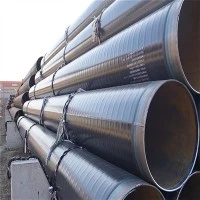
In the pipeline transportation sector, corrosion resistance is crucial in determining pipeline lifespan, operating costs, and safety. Whether it's municipal water supply, oil and gas transportation, chemical media transmission, or mine tailings discharge, pipelines constantly face problems such as corrosion, wear, and aging. Double-layer polyethylene anti-corrosion steel pipes completely solve the problem of insufficient corrosion resistance of traditional steel pipes, making them the preferred choice for engineering procurement in various industries.
The most prominent advantage of double-layer polyethylene anti-corrosion steel pipe is its superior anti-corrosion performance. Unlike traditional single-coated anti-corrosion steel pipes, it adopts a double-layer polyethylene composite structure. The inner layer is a fusion-bonded epoxy layer, and the outer layer is a polyethylene layer. The two layers are tightly bonded and complement each other, forming an indestructible anti-corrosion barrier. The inner fusion-bonded epoxy layer has extremely strong adhesion, firmly adhering to the surface of the steel pipe, effectively isolating the steel pipe from contact with external media and preventing problems such as rust and oxidation. The outer polyethylene layer has excellent chemical resistance, weather resistance, and impact resistance. It can resist the erosion of corrosive media such as acids, alkalis, and salt spray, and can withstand the collisions and wear during external construction and transportation. This double protection allows the pipeline to operate stably even in harsh environments.
Even with simple anti-corrosion treatment, traditional steel pipes typically have a lifespan of only 3-5 years in humid and highly corrosive environments, requiring frequent replacements. This not only increases procurement costs but also disrupts project operations, causing downtime and losses. In contrast, double-layer polyethylene anti-corrosion steel pipes have an extremely stable anti-corrosion layer that is not prone to peeling or aging. Under normal use, their lifespan can reach 20-30 years, 4-6 times that of traditional anti-corrosion steel pipes. This means that a single purchase and installation can meet long-term operational needs, significantly reducing pipeline replacement costs and maintenance workload, saving companies substantial human, material, and financial resources.
Outstanding cost-effectiveness, balancing practicality and economy, is another core advantage of double-layer polyethylene anti-corrosion steel pipes. Many people mistakenly believe that double-layer composite anti-corrosion steel pipes are more expensive, but in actual calculations, the overall cost of double-layer polyethylene anti-corrosion steel pipes is actually lower. On the one hand, double-layer polyethylene anti-corrosion steel pipes do not require additional complex processes such as anti-corrosion coatings and cathodic protection, simplifying the construction process, shortening the construction period, and reducing construction costs. On the other hand, the ultra-long service life of double-layer polyethylene anti-corrosion steel pipes avoids the secondary procurement costs and downtime losses caused by frequent pipe replacements, which is even more advantageous for projects with long-term operation. In addition, as a professional manufacturer, our company has mature production technology, and offers more competitive prices when purchasing in bulk, ensuring cost control for both large-scale and small projects.
Its wide applicability and ability to meet the personalized needs of various industries are also major highlights. The specifications and models of double-layer polyethylene anti-corrosion steel pipes can be customized according to the needs of different industries and scenarios. Whether it's high-pressure, high-temperature oil and gas transportation, or the transmission of highly corrosive chemical media, whether it's municipal water supply, heating pipelines, or mine tailings and sewage treatment pipelines, it can be perfectly adapted. For example, in the chemical industry, it can resist the corrosion of various acids, alkalis, and organic solvents, ensuring the safety of media transportation; in the municipal water supply field, it is non-toxic, odorless, and pollution-free, effectively avoiding the impact of pipeline corrosion on water quality and ensuring the safety of residents' drinking water; in outdoor projects, it can withstand harsh weather conditions such as wind, sun, and rain, and is not prone to aging or cracking, adapting to various complex working conditions.