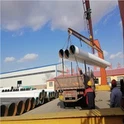
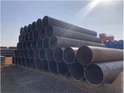
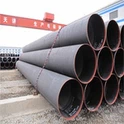
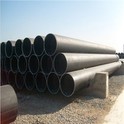
Hey there! As a supplier of ASTM A252 Grade 2, I've been in the thick of the steel game for quite a while. One question that keeps popping up is how to evaluate the weld quality of ASTM A252 Grade 2. Well, I'm here to break it down for you in a way that's easy to understand.
First off, let's talk about what ASTM A252 Grade 2 is. It's a type of steel pipe that's commonly used in the construction of piles and other structural components, especially in marine and offshore applications. These pipes are often welded together to form larger structures, so the quality of the welds is super important. A bad weld can lead to all sorts of problems, like structural failure, which is definitely not something you want.
Visual Inspection
The first step in evaluating weld quality is a good old - fashioned visual inspection. This is something you can do right on the spot, without any fancy equipment. Look for obvious defects like cracks, porosity, and lack of fusion. Cracks are a big no - no. They can start small but grow over time, especially under stress. Porosity looks like little holes in the weld. It's caused by gas getting trapped in the molten metal during the welding process. Lack of fusion means that the weld metal didn't properly bond with the base metal.
When you're doing a visual inspection, pay attention to the weld bead shape. It should be smooth and uniform. If it's all jagged or has big bumps, that could be a sign of a problem. Also, check the weld size. It should meet the specifications for ASTM A252 Grade 2. If it's too small, it might not be strong enough; if it's too big, it could cause distortion.
Dimensional Checks
Next up are dimensional checks. You need to make sure the weld has the right dimensions. Measure the width, height, and length of the weld bead. These measurements should be within the tolerances specified in the ASTM standards. You can use simple tools like a caliper or a ruler for this. If the dimensions are off, it could affect the strength and performance of the weld.
For example, if the weld is too narrow, it might not be able to handle the load it's supposed to carry. On the other hand, if it's too wide, it could use more material than necessary, which adds to the cost. Dimensional checks are also important for ensuring that the welded parts fit together properly. If the weld makes the part out of shape, it might not be usable.
Non - Destructive Testing (NDT)
Visual and dimensional checks are great, but sometimes they're not enough. That's where non - destructive testing (NDT) comes in. There are several NDT methods you can use to evaluate the weld quality of ASTM A252 Grade 2.
Ultrasonic Testing (UT)
Ultrasonic testing is one of the most popular NDT methods. It uses high - frequency sound waves to detect internal defects in the weld. A technician will run a transducer over the weld, and the sound waves will bounce back differently depending on whether there are any flaws. If there's a crack or other defect, the sound waves will reflect in a way that shows up on the testing equipment.
Radiographic Testing (RT)
Radiographic testing, also known as X - ray testing, is another option. It works by passing X - rays through the weld and taking a picture of the internal structure. This can reveal hidden defects that might not be visible on the surface. However, it's more expensive and requires special safety precautions because of the radiation involved.


Magnetic Particle Testing (MT)
Magnetic particle testing is useful for detecting surface and near - surface defects in ferromagnetic materials like ASTM A252 Grade 2. A magnetic field is applied to the weld, and iron particles are sprinkled on the surface. If there's a defect, the magnetic field will be distorted, and the particles will gather around the defect, making it visible.
Destructive Testing
Sometimes, you need to go a step further and do destructive testing. This involves actually breaking or cutting the weld to see how it performs. Tensile testing is one common method. A sample of the welded joint is pulled until it breaks, and the strength of the weld is measured. Bend testing is another option. The welded sample is bent to see if there are any cracks or other signs of weakness.
Destructive testing gives you very accurate information about the strength and quality of the weld, but it has a big drawback: you destroy the part in the process. So, it's usually done on samples rather than on the actual finished products.
Chemical Analysis
The chemical composition of the weld metal can also affect its quality. You can do a chemical analysis to make sure the weld has the right elements in the right proportions. For ASTM A252 Grade 2, you need to pay attention to elements like carbon, manganese, sulfur, and phosphorus. Too much of some elements can make the weld brittle, while too little of others can reduce its strength.
You can use methods like spectroscopy to analyze the chemical composition. This involves shining light on the weld and measuring how the light is absorbed or emitted by the different elements.
Importance of Weld Quality in Applications
The quality of the welds in ASTM A252 Grade 2 pipes is crucial in their applications. For instance, in Offshore Structure Pipe construction, these pipes are exposed to harsh environmental conditions, including saltwater corrosion, high winds, and strong waves. A poor - quality weld can lead to premature failure of the structure, which can be extremely costly and dangerous.
Similarly, in C350 L0 AS1163 Australia Structure Pipe and Euro Underground Pile applications, the integrity of the welds is essential for the long - term performance of the structures. These pipes are often used to support heavy loads, and any weakness in the welds can compromise the safety of the entire structure.
Conclusion
Evaluating the weld quality of ASTM A252 Grade 2 is a multi - step process. It involves visual inspection, dimensional checks, non - destructive and destructive testing, and chemical analysis. Each step plays an important role in ensuring that the welds meet the high standards required for their applications.
If you're in the market for high - quality ASTM A252 Grade 2 pipes with top - notch welds, don't hesitate to reach out. We're here to provide you with the best products and help you with any questions you might have about weld quality or anything else related to our steel pipes. Contact us to start the procurement process and let's work together to build strong and reliable structures.
References
- ASTM International. ASTM A252 Standard Specification for Welded and Seamless Steel Pipe Piles.
- Welding Handbook, American Welding Society.
- Non - Destructive Testing Handbook, American Society for Nondestructive Testing.