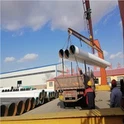
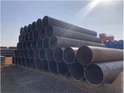
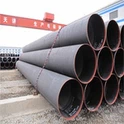
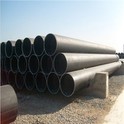
As a supplier of ASTM A252 Grade 2 steel, I've had the privilege of delving deep into the intricacies of this material. ASTM A252 Grade 2 is a type of steel commonly used in the construction of piles, which are essential for providing structural support in various building projects. Understanding the factors that affect its mechanical properties is crucial for ensuring the quality and performance of the final product. In this blog, I'll explore the key elements that can influence the mechanical characteristics of ASTM A252 Grade 2.
Chemical Composition
The chemical composition of ASTM A252 Grade 2 is a fundamental factor in determining its mechanical properties. This grade of steel typically contains elements such as carbon, manganese, phosphorus, sulfur, silicon, and copper. Each of these elements plays a specific role in shaping the steel's behavior.
Carbon is one of the most important elements in steel. It increases the strength and hardness of the material but can also reduce its ductility and weldability. In ASTM A252 Grade 2, the carbon content is carefully controlled to balance these properties. A higher carbon content generally leads to greater strength, but it also makes the steel more brittle. Therefore, the carbon level in this grade is usually kept within a specific range to ensure optimal performance.


Manganese is another key element. It improves the strength and toughness of the steel by forming manganese sulfides, which help to prevent the formation of harmful iron sulfides. Manganese also enhances the hardenability of the steel, allowing it to achieve better mechanical properties after heat treatment.
Phosphorus and sulfur are considered impurities in steel. High levels of phosphorus can make the steel brittle at low temperatures, while sulfur can reduce the weldability and ductility of the material. In ASTM A252 Grade 2, strict limits are set on the phosphorus and sulfur content to minimize these negative effects.
Silicon is often added to steel to improve its strength and hardness. It also helps to deoxidize the steel during the manufacturing process, reducing the formation of pores and inclusions. Copper can enhance the corrosion resistance of the steel, making it more suitable for use in harsh environments.
Manufacturing Process
The manufacturing process of ASTM A252 Grade 2 steel also has a significant impact on its mechanical properties. The steel is typically produced through a combination of processes, including melting, refining, casting, and rolling.
During the melting process, the raw materials are heated to a high temperature to form a molten steel. The quality of the raw materials and the melting conditions can affect the chemical composition and purity of the steel. For example, using high-quality scrap metal can help to reduce the presence of impurities in the final product.
Refining is an important step in the manufacturing process. It involves removing impurities from the molten steel to improve its quality. Common refining methods include oxygen blowing, ladle refining, and vacuum degassing. These processes can effectively reduce the levels of sulfur, phosphorus, and other impurities in the steel, resulting in better mechanical properties.
Casting is the process of pouring the molten steel into a mold to form a specific shape. The casting method and the cooling rate can influence the microstructure of the steel. For example, continuous casting can produce a more uniform microstructure compared to traditional ingot casting. A faster cooling rate can also lead to a finer grain size, which generally improves the strength and toughness of the steel.
Rolling is the final step in the manufacturing process. It involves passing the cast steel through a series of rollers to reduce its thickness and improve its surface finish. The rolling temperature, reduction ratio, and number of passes can all affect the mechanical properties of the steel. For example, hot rolling at a high temperature can improve the ductility of the steel, while cold rolling can increase its strength and hardness.
Heat Treatment
Heat treatment is a crucial process for improving the mechanical properties of ASTM A252 Grade 2 steel. It involves heating the steel to a specific temperature and then cooling it at a controlled rate to achieve the desired microstructure and properties.
One of the most common heat treatment methods for ASTM A252 Grade 2 steel is normalizing. Normalizing involves heating the steel to a temperature above its critical point and then air cooling it. This process helps to refine the grain structure of the steel, improving its strength, toughness, and ductility. Normalizing also helps to relieve internal stresses in the steel, which can improve its dimensional stability.
Another heat treatment method is quenching and tempering. Quenching involves heating the steel to a high temperature and then rapidly cooling it in a quenching medium, such as water or oil. This process can significantly increase the strength and hardness of the steel. However, quenching can also make the steel brittle. Therefore, tempering is usually performed after quenching to reduce the brittleness and improve the toughness of the steel. Tempering involves heating the quenched steel to a lower temperature and then holding it at that temperature for a specific period of time before cooling it.
Microstructure
The microstructure of ASTM A252 Grade 2 steel is closely related to its mechanical properties. The microstructure of the steel is determined by its chemical composition, manufacturing process, and heat treatment.
The most common microstructures in ASTM A252 Grade 2 steel are ferrite and pearlite. Ferrite is a soft and ductile phase, while pearlite is a harder and stronger phase. The proportion of ferrite and pearlite in the microstructure can affect the strength, hardness, and ductility of the steel. For example, a higher proportion of pearlite generally leads to greater strength and hardness, but lower ductility.
In addition to ferrite and pearlite, other microstructures such as bainite and martensite can also be present in the steel, depending on the heat treatment conditions. Bainite is a fine-grained microstructure that has good strength and toughness. Martensite is a very hard and brittle microstructure that is usually formed during rapid cooling, such as quenching.
Environmental Factors
Environmental factors can also have an impact on the mechanical properties of ASTM A252 Grade 2 steel. Corrosion is one of the most significant environmental factors that can affect the performance of the steel. When the steel is exposed to a corrosive environment, such as saltwater or acidic soil, it can gradually lose its strength and integrity.
To prevent corrosion, various protective coatings can be applied to the surface of the steel. These coatings can act as a barrier between the steel and the corrosive environment, reducing the rate of corrosion. Common protective coatings include epoxy coatings, zinc coatings, and paint coatings.
Temperature is another environmental factor that can affect the mechanical properties of the steel. At low temperatures, the steel can become more brittle, increasing the risk of cracking. At high temperatures, the steel can lose its strength and hardness. Therefore, it is important to consider the temperature conditions during the design and use of ASTM A252 Grade 2 steel.
Conclusion
In conclusion, the mechanical properties of ASTM A252 Grade 2 steel are influenced by a variety of factors, including chemical composition, manufacturing process, heat treatment, microstructure, and environmental factors. As a supplier, it is our responsibility to ensure that the steel we provide meets the highest quality standards. By carefully controlling these factors, we can produce ASTM A252 Grade 2 steel with excellent mechanical properties that are suitable for a wide range of applications.
If you are interested in purchasing ASTM A252 Grade 2 steel or other related products such as EN10219 S355J0H, European Piling Pipe, or EN10219 S355J0H Structural Pipe, please feel free to contact us for further information and to discuss your specific requirements. We look forward to working with you to meet your steel needs.
References
- ASTM International. ASTM A252/A252M - 20 Standard Specification for Welded and Seamless Steel Pipe Piles.
- ASM Handbook Committee. ASM Handbook, Volume 1: Properties and Selection: Irons, Steels, and High-Performance Alloys. ASM International, 1990.
- Bhadeshia, H. K. D. H. Steels: Microstructure and Properties. Butterworth-Heinemann, 2006.