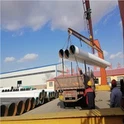
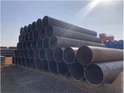
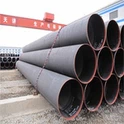
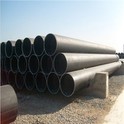
Hey there! As a supplier of CE Piling Pipe, I often get asked about the bending strength of these pipes. So, I thought I'd take a moment to break it down for you and explain what it means, why it's important, and how it affects the performance of CE Piling Pipe in real - world applications.
What is Bending Strength?
Let's start with the basics. Bending strength, in simple terms, is the maximum amount of stress a material can withstand when it's bent before it starts to deform permanently or break. When we talk about CE Piling Pipe, bending strength is crucial because these pipes are often used in construction projects where they're subjected to lateral forces that can cause them to bend.
Imagine you're building a foundation for a large building. The CE Piling Pipes are driven deep into the ground to support the weight of the structure. As the building settles and external forces like wind or seismic activity come into play, the piles may experience bending moments. If the bending strength of the pipes is too low, they could bend excessively, leading to structural instability and potential failure of the foundation.
Factors Affecting the Bending Strength of CE Piling Pipe
A bunch of factors can affect the bending strength of CE Piling Pipe. One of the most significant is the material the pipe is made from. CE Piling Pipes are typically made from high - quality steel, and the grade of steel plays a huge role. Higher - grade steels generally have better mechanical properties, including higher bending strength. For example, a pipe made from a high - strength low - alloy (HSLA) steel will usually have a greater ability to resist bending compared to a pipe made from a mild steel.
The wall thickness of the pipe is another critical factor. A thicker - walled pipe can generally withstand more bending stress than a thinner - walled one. This is because the additional material provides more resistance to deformation. However, increasing the wall thickness also increases the weight and cost of the pipe, so there's a balance that needs to be struck between strength and practicality.
The diameter of the pipe also matters. Larger - diameter pipes tend to have higher bending strength because they have a greater cross - sectional area. This increased area distributes the bending stress more effectively, reducing the likelihood of failure.
Measuring Bending Strength
So, how do we measure the bending strength of CE Piling Pipe? Well, there are standard testing methods that are used in the industry. One common method is the three - point bending test. In this test, a pipe is placed on two supports and a load is applied at the center. The load is gradually increased until the pipe starts to deform or break. The maximum load that the pipe can withstand before failure is then used to calculate the bending strength.
Another method is the four - point bending test. In this test, the pipe is supported at two outer points and the load is applied at two inner points. This test is more representative of real - world loading conditions where the pipe may be subjected to distributed loads over a certain length.
Importance in Different Applications
CE Piling Pipes are used in a wide range of applications, and the bending strength requirements can vary significantly depending on the specific use case.
In onshore construction projects, such as building foundations and bridge piers, the pipes need to have sufficient bending strength to support the weight of the structure and resist any lateral forces. For example, in areas with high wind loads, the piles need to be able to withstand the bending moments caused by the wind pushing against the building.


In offshore applications, the bending strength of CE Piling Pipe becomes even more critical. Offshore structures are exposed to harsh environmental conditions, including strong waves, currents, and wind. Jacket Offshore Platform Structure Pipe and Offshore Structure Pipe are often used in these projects. The piles need to be able to resist the bending forces caused by the dynamic loading from the waves and currents. A failure in the piles could lead to the collapse of the entire offshore platform, which would be extremely costly and dangerous.
Our CE Piling Pipes
As a supplier of CE Piling Pipe, we take great pride in the quality of our products. We use only the highest - grade steels and state - of - the - art manufacturing processes to ensure that our pipes have excellent bending strength. Our pipes are rigorously tested to meet or exceed industry standards, so you can be confident that they'll perform well in your projects.
We understand that every project is unique, and the bending strength requirements can vary. That's why we offer a range of pipe sizes and wall thicknesses to meet your specific needs. Whether you're working on a small onshore building project or a large - scale offshore platform, we can provide you with the right CE Piling Pipe.
Contact Us for Your Projects
If you're in the market for CE Piling Pipe and want to learn more about our products, or if you have specific questions about bending strength and how it relates to your project, don't hesitate to get in touch. We have a team of experts who are ready to assist you with all your piling pipe needs. Whether it's helping you select the right pipe size and grade or providing technical support, we're here to make sure your project is a success.
References
- "Steel Pipe Design and Construction Handbook"
- Industry standards for steel pipe testing and manufacturing