As a supplier of AS 1163 C350 pipe piles, I often encounter technical inquiries from clients, and one question that frequently comes up is about the Poisson's ratio of these pipe piles. In this blog post, I'll delve into the concept of Poisson's ratio, its significance for AS 1163 C350 pipe piles, and provide some insights based on industry knowledge and research.
Understanding Poisson's Ratio
Poisson's ratio, denoted by the Greek letter ν (nu), is a fundamental material property that describes the relationship between the lateral strain and the axial strain of a material when it is subjected to an axial load. When a material is stretched or compressed in one direction (axial direction), it will also deform in the perpendicular (lateral) directions. Poisson's ratio quantifies this lateral contraction or expansion relative to the axial deformation.
Mathematically, Poisson's ratio is defined as the negative ratio of the transverse strain (εt) to the axial strain (εa):
ν = - εt / εa

The negative sign is included because when a material is stretched axially (positive axial strain), it contracts laterally (negative transverse strain), and vice versa. For most engineering materials, Poisson's ratio ranges between 0 and 0.5. A value of 0 indicates that the material does not contract or expand laterally when subjected to an axial load, while a value of 0.5 implies that the volume of the material remains constant during deformation.
Poisson's Ratio of AS 1163 C350 Pipe Piles
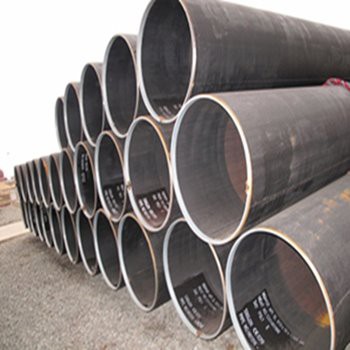
AS 1163 C350 pipe piles are made of structural steel, which is a commonly used material in construction due to its high strength, ductility, and durability. The Poisson's ratio of steel typically falls within the range of 0.25 to 0.33. For AS 1163 C350 pipe piles, a reasonable estimate of the Poisson's ratio is around 0.3.
This value is based on extensive testing and research on structural steel materials. The specific composition and manufacturing process of AS 1163 C350 pipe piles may cause slight variations in the Poisson's ratio, but these variations are generally within an acceptable range. It's important to note that the Poisson's ratio is a material property and is independent of the size and shape of the pipe pile.
Significance of Poisson's Ratio in Pipe Pile Design and Application
The Poisson's ratio of AS 1163 C350 pipe piles plays a crucial role in various aspects of their design and application:
Structural Analysis
In structural analysis, Poisson's ratio is used to calculate the stress and strain distribution within the pipe pile under different loading conditions. For example, when a pipe pile is subjected to an axial compressive load, the lateral expansion due to Poisson's effect can cause additional stresses in the surrounding soil or foundation. These additional stresses need to be considered in the design to ensure the stability and safety of the structure.

Soil-Pile Interaction
The Poisson's ratio also affects the interaction between the pipe pile and the surrounding soil. When a pipe pile is driven into the ground, the lateral expansion of the pile due to Poisson's effect can increase the lateral stress on the soil, which in turn affects the bearing capacity and settlement characteristics of the pile. Understanding the Poisson's ratio is essential for accurately predicting the behavior of the pile in the soil and optimizing the pile design.
Fatigue and Crack Propagation
In applications where the pipe piles are subjected to cyclic loading, such as in offshore structures or earthquake-prone areas, the Poisson's ratio can influence the fatigue life and crack propagation behavior of the piles. The lateral contraction and expansion during cyclic loading can cause additional stresses at the crack tips, which may accelerate the crack growth and reduce the fatigue life of the piles.
Applications of AS 1163 C350 Pipe Piles
AS 1163 C350 pipe piles are widely used in various construction projects, including:
Undergroud Pile
Underground piles are used to support the foundations of buildings, bridges, and other structures. AS 1163 C350 pipe piles provide high strength and durability, making them suitable for use in a variety of soil conditions.
Port Building Pile
Port building piles are used in the construction of ports, wharves, and other marine structures. The corrosion resistance and high strength of AS 1163 C350 pipe piles make them ideal for use in harsh marine environments.
Jacket Offshore Platform Structure Pipe
Jacket offshore platform structure pipes are used in the construction of offshore oil and gas platforms. The high strength and fatigue resistance of AS 1163 C350 pipe piles make them suitable for use in the harsh offshore environment, where they are subjected to high waves, winds, and currents.
Contact Us for AS 1163 C350 Pipe Piles
If you are interested in purchasing AS 1163 C350 pipe piles or have any questions about their technical specifications, including the Poisson's ratio, please feel free to contact us. Our team of experts is ready to provide you with detailed information and assist you in finding the right solution for your project.
References
- Boresi, A. P., Schmidt, R. J., & Sidebottom, O. M. (1993). Advanced mechanics of materials. Wiley.
- Timoshenko, S. P., & Goodier, J. N. (1970). Theory of elasticity. McGraw-Hill.
- Standards Australia. (2017). AS 1163:2017 - Structural steel hollow sections.