Hey there! As a supplier of Wind Farm Pile Systems, I've been knee - deep in the world of wind energy infrastructure for quite some time. One of the most crucial aspects that often gets overlooked but is fundamental to the stability and performance of a wind farm pile system is the load transfer mechanisms. In this blog, I'm gonna break down what these mechanisms are, why they matter, and how our products fit into the picture.
Understanding Loads in a Wind Farm Pile System
Before we dive into the load transfer mechanisms, let's quickly understand the types of loads that a wind farm pile system has to deal with. There are mainly two types: vertical loads and horizontal loads.
Vertical loads come from the weight of the wind turbine itself, including the tower, nacelle, and blades. These are relatively constant, but still significant. Over time, they can cause settlement if not properly managed. Horizontal loads, on the other hand, are more dynamic. They are generated by wind forces acting on the turbine and can change direction and magnitude rapidly. Earthquakes can also contribute to horizontal loads, especially in seismically active regions.

Key Load Transfer Mechanisms
End - Bearing
End - bearing is one of the primary load transfer mechanisms. When a pile is driven into the ground, it reaches a hard layer, like bedrock or a dense sand layer. The bottom of the pile then rests on this hard layer, and a significant portion of the vertical load is transferred directly to it. Think of it like a pillar standing on a solid foundation.
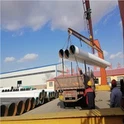
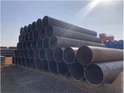
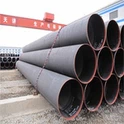
Our CE Piling Pipe is designed to handle end - bearing loads effectively. Its high - strength steel composition can withstand the large vertical forces exerted on the pile tip. The pipe's smooth interior and exterior surfaces also ensure that it can be driven deep into the ground with minimal resistance, reaching the hard layer where end - bearing can occur.
Skin Friction
Skin friction is another important mechanism. As the pile is driven through different soil layers, the soil particles rub against the surface of the pile. This friction creates a resistance force that helps to transfer the load from the pile to the surrounding soil. The amount of skin friction depends on several factors, such as the soil type, the surface roughness of the pile, and the depth of the pile.
For instance, in cohesive soils like clay, the skin friction can be quite high. Our C350 L0 AS1163 Australia Structure Pipe is an excellent choice for such conditions. The surface finish of this pipe can be adjusted to optimize the skin friction. A slightly rougher surface can increase the contact area between the pile and the soil, enhancing the frictional force and thus the load - transfer capacity.
Group Effects
In a wind farm, piles are usually installed in groups. When piles are close together, their load - transfer mechanisms interact. This is known as the group effect. In a pile group, the end - bearing and skin friction of individual piles can be affected by the presence of neighboring piles.
For example, if the piles are too close, the stress fields around each pile can overlap, reducing the overall load - carrying capacity of the group. Our engineers take these group effects into account when designing the wind farm pile systems. We use advanced numerical models to simulate the behavior of pile groups under different load conditions. This allows us to optimize the spacing and arrangement of the piles to ensure efficient load transfer.
How Our Products Enhance Load Transfer
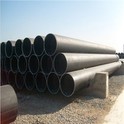
Our Port Building Pile is a great example of how our products are engineered to enhance load transfer. These piles are made with high - quality steel that has excellent mechanical properties. They can be customized in terms of diameter, wall thickness, and length to meet the specific requirements of a wind farm project.

We also offer advanced coating options for our piles. These coatings not only protect the piles from corrosion but can also improve the load - transfer characteristics. For example, a special anti - friction coating can reduce the resistance during pile driving, allowing the pile to reach the desired depth more easily. And in some cases, a coating can enhance the skin friction between the pile and the soil.
The Importance of Proper Load Transfer
Proper load transfer is crucial for the long - term stability and performance of a wind farm. If the loads are not transferred effectively, it can lead to excessive settlement of the piles, which can cause misalignment of the wind turbines. This misalignment can reduce the efficiency of the turbines and increase the wear and tear on the components, leading to higher maintenance costs and shorter service life.
Moreover, in extreme weather conditions or seismic events, a well - designed load - transfer system can prevent the failure of the pile foundation. This is essential for the safety of the wind farm and the surrounding environment.
Conclusion
So, there you have it! The load transfer mechanisms in a wind farm pile system are complex but vital for the success of any wind energy project. As a supplier, we're committed to providing high - quality products that are designed to optimize these mechanisms. Whether it's through end - bearing, skin friction, or managing group effects, our piles are engineered to handle the diverse loads that a wind farm faces.
If you're involved in a wind farm project and are looking for reliable pile systems, I'd love to have a chat with you. We can discuss your specific requirements and see how our products can fit into your project. Contact us to start the procurement process and let's build a more sustainable future together with efficient wind energy solutions.
References
- API RP 2A - WSD, “Recommended Practice for Planning, Designing, and Constructing Fixed Offshore Platforms - Working Stress Design,” American Petroleum Institute.
- Eurocode 7: Geotechnical Design, European Committee for Standardization.
- Tomlinson, M. J., & Woodward, J. C. (2014). Pile Design and Construction Practice. Taylor & Francis.