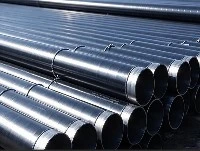
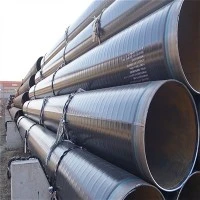
Steel pipes, with their high strength and pressure resistance, are widely used in various engineering fields such as municipal water supply, oil and gas transportation, chemical production, and building fire protection. However, ordinary carbon steel is highly susceptible to corrosion in water, soil, acidic and alkaline environments, and atmospheric conditions. This not only shortens the pipeline's service life but also causes media leakage and increases engineering maintenance costs. Therefore, anti-corrosion coated steel pipes have become the mainstream material for engineering pipeline construction. With numerous anti-corrosion processes and coating performances available on the market, selecting the most suitable, cost-effective, durable, and safe anti-corrosion coated steel pipes for the project requires careful consideration. Blindly purchasing is not advisable; a comprehensive evaluation of the working environment, media conditions, service life, and project budget is necessary, following scientific selection principles.
Clearly defining the properties of the transported media is the primary prerequisite for selection, as the media directly determines the anti-corrosion standard of the pipeline's inner wall. For transporting tap water, purified water, and other drinking water, the pipe coating must be non-toxic and harmless, meeting national water hygiene standards. TPEP internal and external anti-corrosion steel pipes and IPN8710 epoxy anti-corrosion steel pipes are preferred. These types of pipes have smooth, antibacterial inner walls, do not leach heavy metals, and will not pollute water quality. Epoxy coal tar anti-corrosion pipes are absolutely prohibited. For transporting sewage or reclaimed water, which contains slight corrosiveness and sediment, wear-resistant and corrosion-resistant fusion-bonded epoxy powder anti-corrosion steel pipes can be selected, offering both anti-scaling and corrosion resistance. For corrosive media such as chemical acids, alkalis, and oil and gas, ordinary plastic coatings cannot resist corrosion. Single-layer or double-layer FBE fusion-bonded epoxy powder steel pipes should be selected, as they are resistant to strong acids and alkalis, have extremely strong adhesion, and are suitable for special chemical transport conditions. For cable conduits and ventilation venting pipelines without media, only basic rust prevention and insulation are required; ordinary PE coated steel pipes are sufficient.
Assess the laying environment to determine the external wall anti-corrosion level, adapting to different outdoor and underground corrosion scenarios. Pipeline laying is mainly divided into three forms: underground, overhead, and trench, each with significantly different corrosion risks. Buried pipelines are in constant contact with soil and groundwater. In saline-alkali lands and coastal areas, the high chloride ion content in the soil leads to extremely strong electrochemical corrosion, making conventional pipes highly susceptible to damage and aging. For buried gas and water mains in ordinary soils, 3PE three-layer polyethylene anti-corrosion steel pipes are the industry's first choice, offering waterproofing, insulation, and resistance to gravel crushing, with a service life of up to fifty years. In highly corrosive soils such as coastal and swampy areas, upgraded double-layer epoxy anti-corrosion steel pipes are required to enhance corrosion resistance. Overhead open-air pipelines are subjected to long-term exposure to wind, sun, rain, and snow oxidation, eliminating the need for thick impact-resistant coatings. Hot-dip galvanized steel pipes and thin epoxy anti-corrosion steel pipes offer better cost-effectiveness and are suitable for building sprinkler systems and factory overhead pipelines. For semi-buried and semi-exposed trench pipelines, which are exposed to both atmospheric and soil corrosion, TPEP steel pipes with internal and external double anti-corrosion coatings are preferred, suitable for complex and composite environments.
Controlling the medium temperature and pipeline pressure is crucial to ensuring the safety of the coating during use. Each type of anti-corrosion coating has a fixed upper temperature limit; exceeding this range will cause softening, peeling, and flaking. 3PE and polyethylene coatings have the lowest temperature resistance, with long-term use not exceeding 70℃, suitable only for ambient temperature water and oil/gas transportation; IPN8710 anti-corrosion coating is suitable for temperatures not exceeding 80℃; FBE epoxy powder has a wider temperature range, withstanding temperatures from -30℃ to 100℃, suitable for medium and high temperature media; hot-dip galvanized steel pipes have the best temperature resistance, suitable for pipelines up to 200℃. Simultaneously, the pipeline pressure rating must be matched. Small-diameter, low-pressure fire branch pipes use plastic-coated straight seam steel pipes, while large-diameter, high-pressure oil/gas and water main pipelines use seamless or thickened spiral base pipes with high-end anti-corrosion coatings to ensure both pressure resistance and corrosion resistance.
Considering service life and project budget, balancing quality and cost, a rational choice of anti-corrosion technology is crucial. The cost and service life of various anti-corrosion pipe materials differ significantly; therefore, it's unnecessary to blindly pursue high-end materials. For long-term municipal main roads and oil and gas infrastructure projects requiring maintenance-free operation for over 30 years, high-end anti-corrosion pipes such as 3PE and TPEP are preferred. While the initial investment is higher, the subsequent maintenance costs are extremely low, resulting in higher overall benefits. For mid-term projects in residential communities and factory circulating water systems, with a service life of 15 to 25 years, ordinary internally and externally epoxy-coated steel pipes are sufficient, offering a moderate cost-performance ratio. For temporary sewage discharge and short-term pipelines at construction sites, where budgets are limited and the service life is short, epoxy coal tar pitch anti-corrosion steel pipes can be used. They are inexpensive, easy to install, and meet short-term needs.
Furthermore, the final selection process must verify the pipe material's national standards and quality inspection standards. Standard anti-corrosion steel pipes must pass thickness testing, spark leak testing, and adhesion testing. Drinking water pipes must have a hygiene inspection report. Avoid purchasing non-standard, thin-coated, inferior pipes to prevent rapid corrosion and damage after installation.
In short, there is no absolutely optimal type of anti-corrosion coated steel pipe; only the most suitable choice. The selection process always follows the core logic of "medium determines inner wall, environment determines outer wall, temperature sets the red line, and budget determines grade," taking into account all aspects of the actual project. This approach can not only avoid pipeline corrosion risks and ensure the safe and long-term operation of the project, but also reasonably control costs and achieve a balance between practicality and economy.